
Before a Jinko shipment leaves the factory, it goes through four checks: leak testing, appearance, pressure resistance and packaging. If you sell shower filters under your own brand, those four checks are the base of any shower filter quality inspection, but they only protect you once you know what “pass” means for your order. This guide turns each check into something you can verify on your side, then adds three checks buyers should add themselves: the connection thread, the cartridge inside the housing, and the labels. At the end you get a checklist table you can copy into your purchase order.
Start with the four checks every shipment should pass
An inline shower filter has a few joints, one cartridge and a box. Most problems after delivery start at those joints or in assembly, so the four factory checks cover the points that cause returns:
- Leak test: water escaping at the connection, a housing seam or the cartridge cap is the complaint end customers notice first.
- Appearance: scratches, sink marks or a misplaced logo look like a cheap product, even when the filter works.
- Pressure resistance: the housing has to stay sealed across the water pressure it is rated for, not just at a gentle trickle.
- Packaging: a crushed box, a missing cartridge or the wrong manual turns a good filter into a return.
Here is what a leaking shower filter looks like from the customer’s side. Stopping it at the factory costs far less than replacing units in your market.
Appearance and dimensions
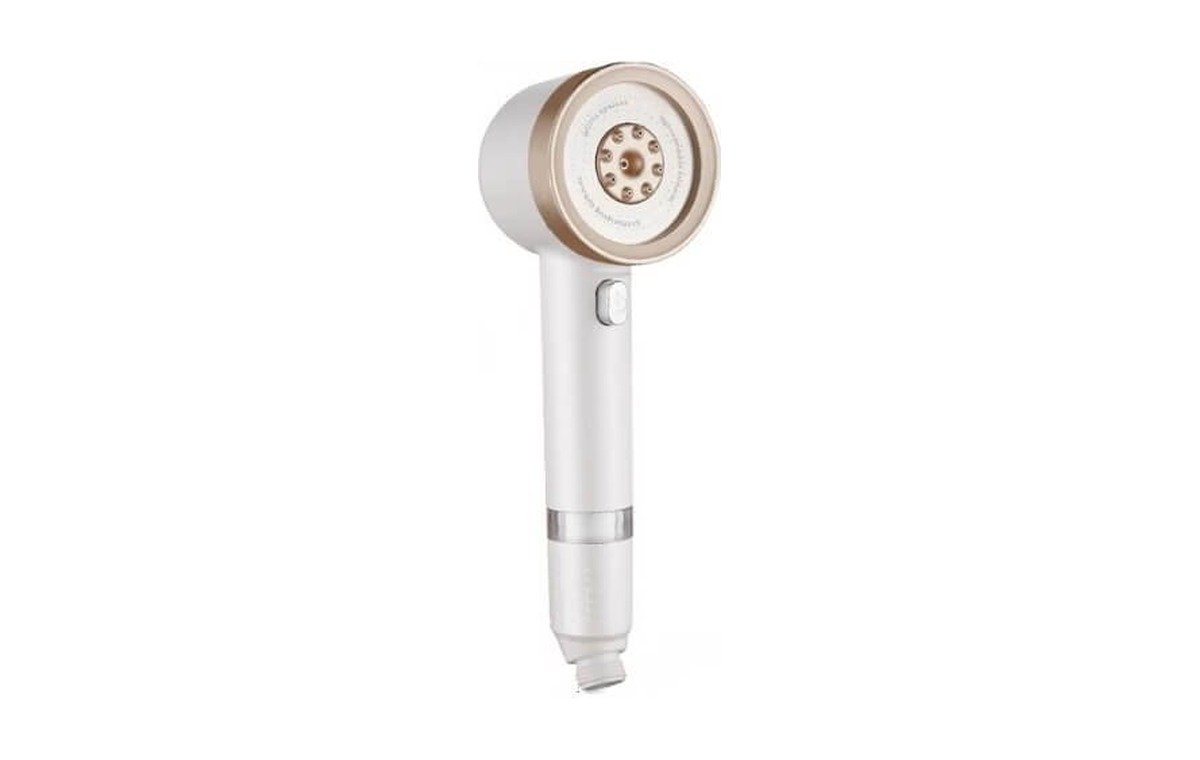
Jinko’s plastic housings are made from ABS and PP, and the metal models use aluminium alloy. Each material shows defects differently, so inspect against your approved sample rather than a written description. Look for:
- Scratches and scuffs on visible surfaces
- Sink marks, flash or rough edges along mould lines
- Color difference between the housing and the cap, or between units in the same carton
- Logo position, size and print quality compared with the golden sample
Agree the viewing conditions in advance (light, distance, how long each unit is looked at), so the factory and your inspector judge the same way.
For dimensions, compare units against your drawing and the approved sample. A caliper is enough to measure the connection outer diameter, the thread length and the overall length. This only works if you have a reference to measure against, which is why it pays to sign off a golden sample before production.
Connection, seals and leak test
Jinko’s shower filters use a G1/2″ connection. Check that every sealing washer is present, seated flat and not twisted, and that the threads are clean and undamaged. On a parallel thread the washer does the sealing, so a missing one is a likely leak.
For the leak test itself, the filter is connected to water under pressure and held there while the inspector watches three points: the inlet and outlet connections, the housing seams, and the cartridge cap. The test pressure and hold time are not universal. We did not find a common factory test standard for shower filters, so agree both figures with your supplier and write them into the order.
Check the thread your market uses
G threads under ISO 228-1 are parallel, and the joint seals on a washer or sealing face, not on the thread. NPT threads (ASME B1.20.1) are tapered and seal by the threads wedging together with sealant. The two are separate standards with different thread forms, so fit is something to confirm on a sample rather than assume.
In the United States, shower parts commonly use 1/2″ threads, either NPT or NPSM, a straight thread that seals with a washer. Delta’s threading note describes its shower components as 1/2″-14 NPSM or NPT. Jinko’s G1/2″ filters fit standard US 1/2″ NPT shower arms directly, with no adapter. For other markets, confirm which thread is used, and in every case test the sample on a real shower arm from your market. A few wraps of thread seal tape on the arm helps prevent drips at that joint.
Pressure and temperature range
Jinko’s shower filters are rated for water pressure of 0.1 to 0.5 MPa (roughly 15 to 72 psi) and water temperature of 5 to 55°C (41 to 131°F). The pressure resistance check should cover that range, not just one point inside it. Compare it with the water pressure your customers actually have, and raise any gap with your supplier before production.
Leak and pressure checks can run in one test sequence. Record them separately, though. If a unit fails, you need to know whether it leaked at the joint or the housing gave way, because the fixes are different.
Cartridge assembly and formula check
The cartridge is what your customer pays for, and it sits inside a closed housing. Open sample units and check that it matches the order. On Jinko’s range:
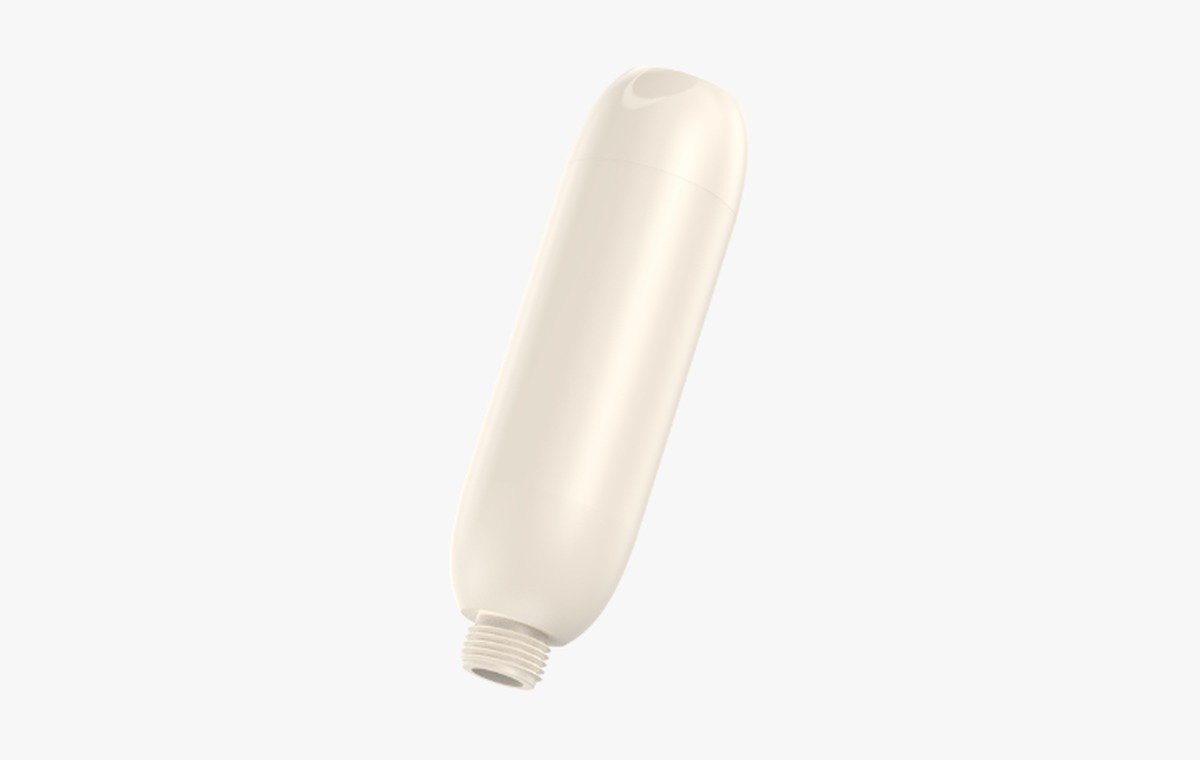
- JK-S3 can be fitted with PP cotton plus calcium sulfite, a carbon block cartridge, or a carbon fiber cartridge.
- JK-S4, JK-S5 and JK-S6 use a composite cartridge: carbon fiber, copper-zinc (KDF-type) media, calcium sulfite and vitamin C.
For each opened unit, check that the cartridge is fully seated, faces the right way, has its media layers in the approved order, and carries the right label. Cartridges for the S3 and the C5 do not fit other models, so a wrong cartridge in those boxes is a real risk. The S4, S5 and S6 share one cartridge, which means a wrong formula would still fit. If you ordered a custom cartridge configuration, check the label, not the fit.
Whether the formula works is a different question. Lab-tested shower filter results come from water testing in a laboratory, not from a shipment inspection. An inspector on the factory floor cannot confirm chlorine reduction. If your market or retailer asks for that kind of evidence, read what NSF/ANSI 177 testing covers before you set your claims.
Packaging and labels
Packaging checks are quick and catch a lot. Check:
- Units per carton against the packing list
- Shipping marks on each carton: model and batch number
- Inner packaging that holds the filter in place
- Box contents: the filter body and the cartridge, with no shower head included
- Manual language for each market you ship to
- Barcode present and scannable
If your artwork is approved, the inspector only has to compare the printed box with it. Our guide to box and label planning for shower filters covers what should be on each panel.
How AQL sampling works
You rarely inspect every unit. Most pre-shipment inspections use AQL (acceptable quality limit) sampling under ISO 2859-1 or ANSI/ASQ Z1.4. You look up the lot size in the table, read off a sample size code, and inspect that many units. Many buyers use general inspection level II.
Each defect class gets its own AQL. A common setup is 0 for critical defects, 2.5 for major and 4.0 for minor. QIMA describes each value as common in its own use (0 for critical, 2.5 for general consumer goods, 4.0 where minor cosmetic defects are acceptable). It is a convention, not a rule set by Jinko or by any shower filter standard.
Here is how the numbers work, using the example from QIMA’s AQL guide. For a lot of 4,000 units at level II, the sample size code is L, which means 200 units are inspected. At AQL 2.5, the lot passes with up to 10 major defects in the sample and fails at 11. With AQL 0 for critical defects, no critical defect is accepted in the sample.
Example defect classes for shower filters
The table below is a suggested starting point, not a standard. Adjust it to your product and your market.
| Class | Examples |
|---|---|
| Critical | Leak at any point, cracked housing, missing cartridge, wrong cartridge model |
| Major | Damaged connection thread, missing washer or seal, misplaced logo, wrong carton quantity |
| Minor | Light scratches, slight color difference |
Keep in mind that AQL is a conclusion about a sample. A lot that passes has not had every unit tested. If leaks worry you most, you can ask for 100% leak testing as a separate requirement. Whatever you choose, agree the AQL levels, defect classes and inspection method with your supplier before the order is confirmed, not after the goods are packed.
Who does the inspection
You can inspect yourself, send your own staff, or hire a third-party inspection company such as QIMA or V-Trust. If you plan a third-party inspection, agree with your supplier whether it is accepted, when the goods will be ready, and where the inspector will work. That fits into the wider plan for sourcing shower filters from China, where the inspection date sits between production and booking freight.
The inspection record is your proof at shipment. After delivery, Jinko’s warranty runs for one year from the shipping date, and quality problems confirmed with photos or video are covered by replacement units. For the production side, see Jinko’s shower filter manufacturing service.
Copy this checklist
Paste this table into your purchase order or inspection booking. Where a pass criterion says “agree”, settle the figure with your supplier first. The defect class column follows the suggested classes above.
| Check | How to check | Pass criteria | Defect class | Result |
|---|---|---|---|---|
| Housing surface | Visual check under agreed light and distance | No cracks; scratches and sink marks within agreed limits | Critical (crack) / Minor | Pass / Fail |
| Color and finish | Compare with golden sample | Matches approved sample | Minor | Pass / Fail |
| Logo and print | Compare position, size and print with golden sample | Matches approved sample | Major | Pass / Fail |
| Dimensions | Caliper against drawing | Within agreed tolerance | Major | Pass / Fail |
| Connection thread | Visual check; fit on a shower arm from your market | Thread type as ordered, undamaged, fits by hand | Major | Pass / Fail |
| Washers and seals | Visual check of each sealing point | Present, seated flat, not twisted | Major | Pass / Fail |
| Leak test | Pressurized water at agreed pressure and hold time | No water at connections, seams or cartridge cap | Critical | Pass / Fail |
| Pressure resistance | Test across 0.1 to 0.5 MPa, recorded separately from leak test | No leaks or housing damage | Critical | Pass / Fail |
| Temperature range | Confirm test conditions and manual cover 5 to 55°C | Range stated and covered as agreed | Major | Pass / Fail |
| Cartridge model | Open sample units | Cartridge matches order and model | Critical | Pass / Fail |
| Cartridge seating | Open sample units | Fully seated, correct direction | Major | Pass / Fail |
| Cartridge configuration | Check label and layer order against approved configuration | Matches approved configuration | Critical | Pass / Fail |
| Cartons and marks | Count units; read shipping marks | Quantity matches packing list; model and batch number correct | Major | Pass / Fail |
| Box contents | Open sample boxes | Filter body and cartridge present; manual included | Critical (missing cartridge) / Major | Pass / Fail |
| Box print, manual and barcode | Compare with approved artwork; scan barcode | Matches artwork; right language; barcode scans | Major | Pass / Fail |
| Documents | Request before shipment | Inspection record for your order; CE and RoHS documentation | Major | Pass / Fail |
When you request a quote, ask what inspection record is available for your order and how it covers the leak, appearance, pressure resistance and packaging checks. Include the product, your sales channel, the quantity and whether you need customization, and attach your box and label requirements so they can be checked against the same list. Ask for the shipment inspection record with your quote, or browse the OEM shower filter range first.