
“Does your filter have NSF 177?” Brands selling into the US hear this question often. The short answer is no. Jinko can provide CE and RoHS documentation for its shower filters, and none of our models is listed under NSF/ANSI 177. That answer is where the useful conversation starts, not where it ends. If a retailer or end customer asks you for an NSF 177 shower filter, you need to know what the standard covers, what it leaves out, and what you can honestly print on your box and spec sheet while you decide whether certification is worth the investment. This article covers all three.
What NSF/ANSI 177 actually tests
NSF/ANSI 177 is written for one product group: shower filtration systems. According to NSF’s page on shower filter certification, the standard sets minimum requirements in five areas:
- Material safety: the materials used in the filter are reviewed for this use.
- Structural integrity: the housing and connections have to hold up in service.
- Minimum flow: the filter still has to deliver a usable shower flow.
- Free available chlorine reduction: the one performance claim the standard is built around.
- Product literature: what the packaging, manual and labels tell the user.
The standard is sold through the ANSI webstore, and it has been revised more than once, so confirm which edition your certifier applies. We have deliberately left test conditions out of this article. Older write-ups quote inlet chlorine levels and reduction targets from the original edition, and those may not match the current text. Take test parameters from the current standard or from the certifier, not from blog posts, including this one.
The scope is narrower than many shoppers assume. In NSF’s public listings for shower filters, the claim shown is free available chlorine reduction, and the products sit under aesthetic effects, not health effects. In practice that means:
- A 177 listing makes no claim about chloramine. Some water utilities disinfect with chloramine rather than free chlorine, and it behaves differently in a filter. Our guide to chlorine and chloramine in shower water explains the difference.
- It is not a health effects certification.
- It does not show that a filter reduces heavy metals, bacteria or scale.
The list is also short. Only a handful of products appear on it, which is why shoppers struggle to find NSF certified shower filters at all.
NSF 177 vs NSF 42 vs NSF 53
Buyers often write “NSF certified” without naming a standard. The three numbers that come up most often cover different products and different claims. NSF summarizes the drinking water standards in its overview of filtration standards.
| Standard | Product type | Typical claims | Category |
|---|---|---|---|
| NSF/ANSI 177 | Shower filtration systems | Free available chlorine reduction | Aesthetic effects |
| NSF/ANSI 42 | Drinking water treatment units, point-of-use and point-of-entry | Chlorine, taste and odor, chloramine, particulates | Aesthetic effects |
| NSF/ANSI 53 | Drinking water treatment units | Contaminants with health effects, such as lead, cysts like Cryptosporidium, and VOCs | Health effects |
NSF 42 and NSF 53 are drinking water standards. A shower filter is not a drinking water device, so a 42 or 53 certificate for an under-sink or pitcher filter does not carry over to a shower product, even from the same supplier. Keep that in mind when you see certificate images on a factory website: they may belong to another product line or an older model.
When a buyer asks for NSF certified shower filters, ask three things back: which standard, which model, and which claim. The answers usually show whether they need a 177 listing specifically, or whether they mainly want evidence that the filter reduces chlorine.
What certification involves, and what we cannot quote for you
NSF outlines its certification process for water treatment products in roughly seven steps. The details vary by product, so confirm with the certifier how they apply to a shower filter:
- Application
- Submission of product information, such as materials, media and literature
- Technical review
- Facility audit and sample collection
- Laboratory testing
- Final evaluation
- Certification and listing
After that, the certification is maintained through ongoing audits and retesting, on a yearly cycle.
Three points matter for a brand planning a launch:
- Certification is tied to a model and configuration. If you later change the cartridge media, the housing or the supplier of a component, the product may need to be re-evaluated. Confirm with the certifier which changes trigger that.
- Cost and timeline depend on your project. There is no published price list that fits every case. Ask the certification body for a quote based on your models and claims, and plan your launch date around their answer.
- Stability comes first. Certification only makes sense once the cartridge formula, housing material and component sources are fixed. Changing them mid-process wastes money.
Decide early who applies and who owns the listing: your company or the factory. That choice is part of how responsibilities are split between brand and manufacturer, which we cover in our comparison of OEM, ODM and private label.
What brands can do without an NSF 177 listing
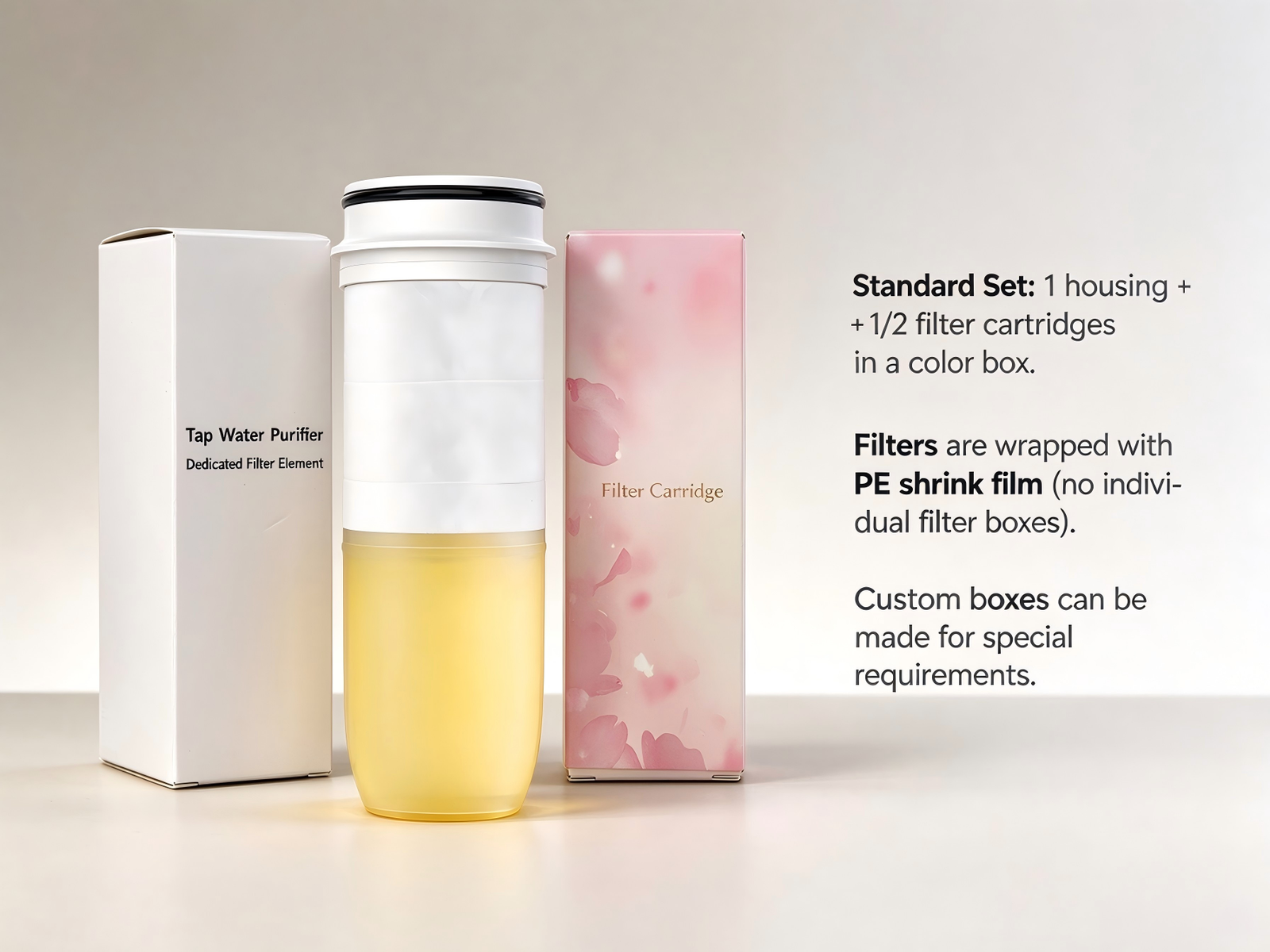
Many brands sell shower filters without a 177 listing. What they cannot do is imply one. A workable route is to commission testing from an independent laboratory yourself. You choose the lab and the method, and the factory supplies production-representative samples and the product details the lab needs. If you take this route with Jinko, we can provide samples along with the materials and cartridge configuration of the model being tested.
Whoever runs the test, make sure the report shows these five things. Without them, a report is hard to use with retailers:
- Standard or method: the name of the standard or test method followed.
- Inlet water conditions: the form and level of chlorine, water temperature and flow rate.
- Model and configuration: the exact model, housing and cartridge media tested.
- Cartridge life conditions: how much water, or how long, the cartridge was run during the test.
- Lab name and report date: who tested it and when.
Then keep your marketing inside what the documents support:
- Do not write “NSF certified” or use the NSF mark unless that exact model is listed.
- Do not use wording that suggests a listing, such as “NSF quality” or “meets NSF standards”, without one.
- If a real report exists, you can describe it plainly, for example “tested by an independent lab to [method]”. Check the exact wording with the lab.
- Leave reduction percentages off the box unless a report for that exact model and cartridge supports them.
Channel requirements differ. A retailer, distributor or marketplace may ask for certain documents and not others, and requirements change. Ask each channel what it needs before you order packaging. Our article on preparing shower filters for Amazon covers the documents to have ready.
What Jinko can provide today
Here is where we stand, so you can plan around it:
- Documents: Jinko can provide CE and RoHS documentation. We do not hold an NSF/ANSI 177 listing.
- Shipment checks: before shipment we check for leaks, appearance, pressure resistance and packaging. See how we inspect shower filters before shipment for the details.
- Samples: samples of existing models take 2 to 3 days, and customized samples take 5 to 7 days. Whether a sample is charged depends on the request, and the sample fee can be credited against your order. If you plan third-party testing, we can prepare samples for your lab.
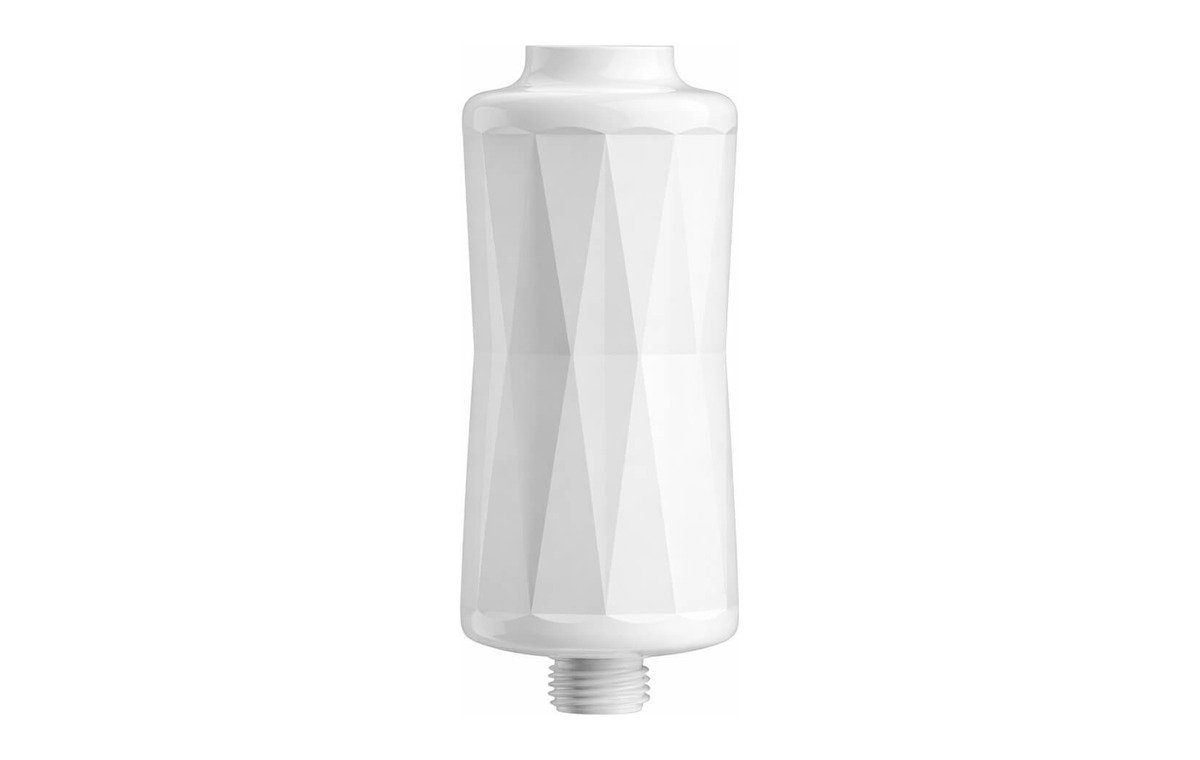
- Cartridge make-up: the JK-S4, JK-S5 and JK-S6 use a composite cartridge of carbon fiber, copper-zinc (KDF-type) media, calcium sulfite and vitamin C. The JK-S3 can be fitted with PP cotton plus calcium sulfite, a carbon rod cartridge or a carbon fiber cartridge. For background on the metal media, read what copper-zinc (KDF-type) media is.
If your target channel requires a 177 listing, say so when the project starts, not after the first shipment. Certification is tied to a fixed model and cartridge, so the choice affects which configuration you lock in. You can compare the models in Jinko’s shower filter OEM range.
What to write in your spec sheet
A clear spec sheet saves you from awkward follow-up questions. Fill in what you can document and state the rest honestly. A starting template for a Jinko model:
- Model: your model name and the factory reference
- Housing material: ABS or PP; aluminum alloy on the JK-S6
- Connection: G1/2″, no adapter needed
- Water temperature: 5 to 55°C
- Water pressure: 0.1 to 0.5 MPa
- Media configuration: list each layer of the cartridge
- Replacement interval: every 3 to 6 months, depending on water conditions and use
- Documents available: CE, RoHS
- Third-party test report: state the status as it is: none, in progress, or available with lab name and date
Leave NSF claims, reduction percentages, heavy metal and bacteria claims off the sheet unless you hold the listing or report to back each one.
Planning a range for the US or another market? Send us your target market, your sales channel, whether that retailer or platform has stated a certification requirement, and the tests you plan to run. We will tell you which documents we can supply and how we would arrange samples for your lab. Start through our project inquiry form.