

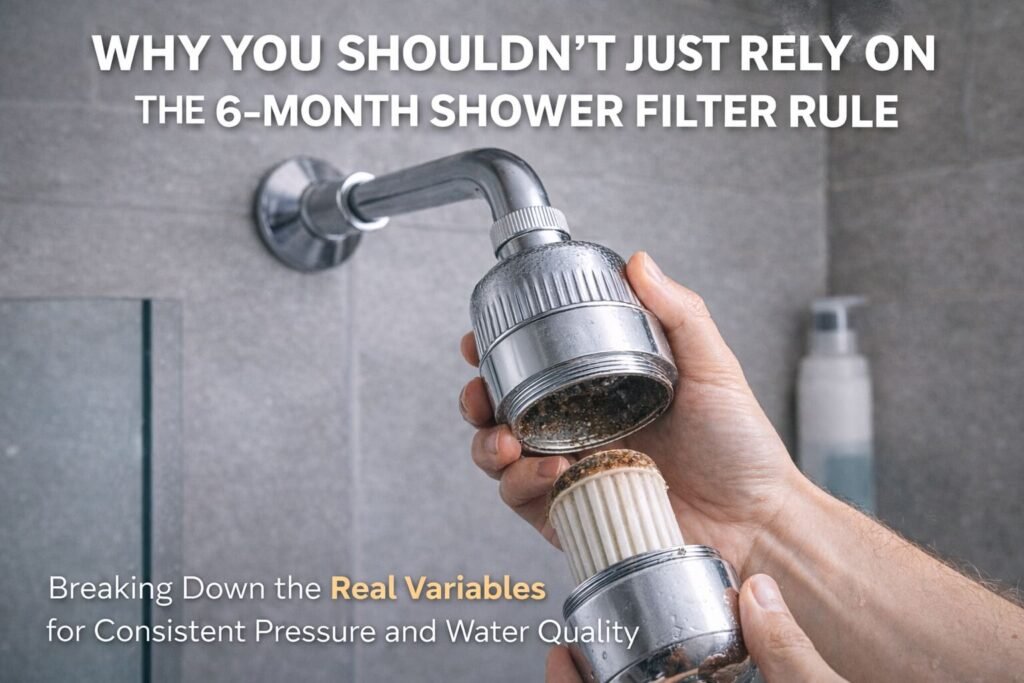
If your shower filter box promises six months of protection but your hair feels like straw after only three, you aren’t imagining things. You are likely dealing with early media saturation.
Standard guidelines often ignore the biggest variable: your local water quality. When hard water sediment clogs the mesh or high chlorine levels exhaust the carbon early, that expiration date becomes meaningless.
In this guide, we break down the real math behind filtration lifespan and why upgrading to a 15-stage system like Jinko is the only way to maintain that “First Shower Feeling.”
Deconstructing “Expectations”: What Users Actually Care About
When we analyze shower filter replacement cycles, we have to look beyond the technical data sheets and focus on the user’s daily reality. Our customers aren’t necessarily counting gallons; they are monitoring a sensory experience. The primary expectation is consistency.
Users want that distinct “First Shower” feeling—where the water feels softer, smells cleaner, and leaves hair manageable—to persist from Day 1 through Day 150.
When we design theJinko 15-stage filtration system, our goal is to ensure that the reduction of municipal water contaminants remains effective without a noticeable decline in performance as the cartridge ages.
Balancing Filtration with Flow Rate
A major concern for any user installing a filtration device is the fear of losing water pressure. We know that effective filtration requires contact time, but it shouldn’t result in a frustrating trickle.
- Sediment Management: As the filter traps hard water sediment and rust, cheaper units clog quickly.
- Flow Engineering: We utilize a multi-stage design that layers filtration media to maintain a high shower head flow rate while still capturing impurities.
- Pressure Stability: Our customers expect the water pressure to remain robust, even as the filter nears its saturation point.
The Return of Symptoms vs. Calendar Dates
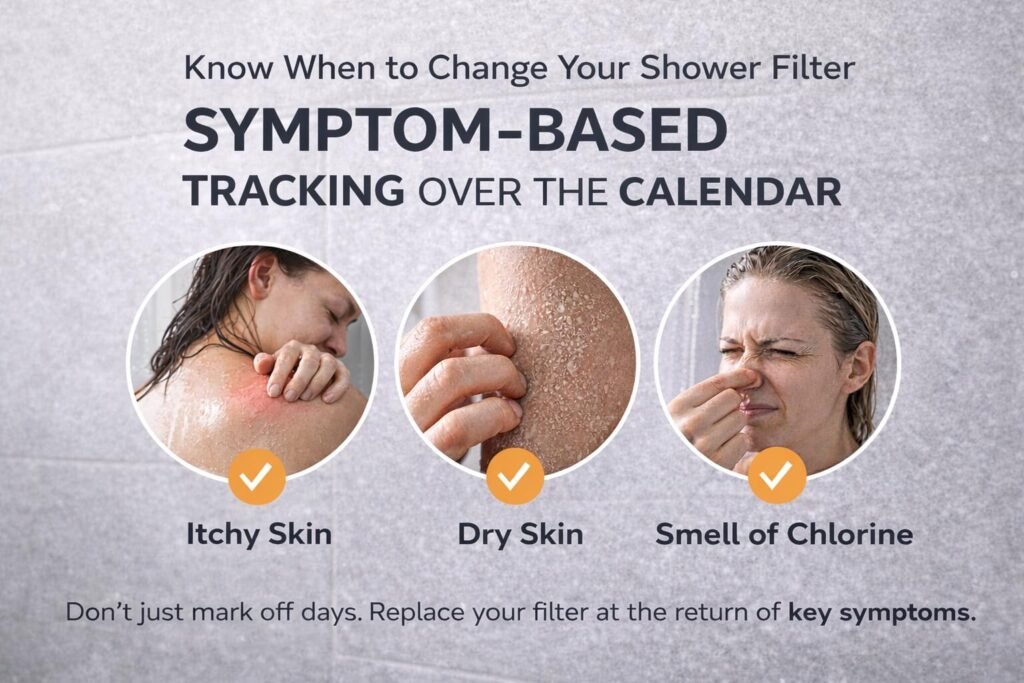
While we provide a general 4-6 month guideline for the shower filter cartridge lifespan, the true indicator for replacement is often physical. We encourage users to track the return of symptoms rather than just marking a calendar. The moment a user notices the recurrence of dry, itchy skin or the faint scent of chlorine, the cycle is complete.
This “symptom-based” tracking is crucial becausewater quality maintenance varies heavily by household usage and local water conditions. Ultimately, the expectation is simple: the filter works as long as the benefits to skin and hair are tangible.
The Variables: Why “6 Months” is Just a Guideline
Most manufacturers base their replacement estimates on a single person taking one 8-minute shower a day in moderate water conditions. However, the “Real” lifespan of a filter cartridge is a calculation of volume plus contaminant load.
| Household Size | Avg. Daily Showers | Standard Water | Hard Water / High Chlorine |
| Single User | 1 | 6 – 8 Months | 4 – 5 Months |
| Couple | 2 | 4 – 6 Months | 3 – 4 Months |
| Family (3-4) | 3 – 4 | 3 – 4 Months | 2 Months |
Table 1: Estimated Jinko Filter Lifespan based on Usage Volume and Water Hardness.
3 Sensory Signs Your Filter is “Dead”
Technical specs aside, your senses are the ultimate detector. Instead of looking at the calendar, look for these three non-negotiable signs that you have hit the chlorine saturation point.
1. The “Pool Water” Smell Returns
Jinko’s 15-stage filtration system uses KDF 55 and Calcium Sulfite specifically to neutralize odors. If you turn on the hot water and smell that distinct bleach-like scent, the chemical media is spent. It is no longer protecting your skin from chlorine absorption.
2. The “Soap Scum” Test
Hard water minerals (calcium and magnesium) prevent soap from lathering. If you notice you are using more shampoo to get a foam, or if hard water stains are reappearing on your glass doors, the softening layers are saturated.
3. The Pressure Drop (The “Sacrifice” Sign)
A significant water pressure drop is actually a sign the filter is working. It means the physical mesh layers have successfully trapped a massive amount of rust, sand, and pipe debris.
Note: Do not remove the filter to fix the pressure. That drop proves your water is dirty. The solution is a replacement cartridge, not removal.
The 15-Stage Advantage: Why Architecture Matters
Why do some filters clog in 4 weeks while others last months? It comes down to internal architecture. Cheap single-stage filters try to do everything with one layer of carbon, which saturates instantly in hot water.
We engineered the Jinko 15-stage system to act like a relay race:
- Phase 1: Pre-Filtration: Stainless Steel Mesh and PP Cotton trap the “big chunks” (rust, sand) so they don’t clog the fine chemicals.
- Phase 2: Neutralization: KDF 55 and Calcium Sulfite are specialized for hot water environments where standard carbon often fails.
- Phase 3: Polishing: Vitamin C and Activated Carbon add a final conditioning touch for hair and skin health.
We often state that a Jinko filter lasts about 4 to 6 months, but this is a general baseline, not a hard rule. The actual shower filter cartridge lifespan depends entirely on the specific conditions of your home environment. A filter doesn’t expire because time passes; it expires because its filtration media has reached saturation.
Understanding the variables below helps manage expectations regarding when a swap is actually necessary.
Water Hardness and Sediment Load
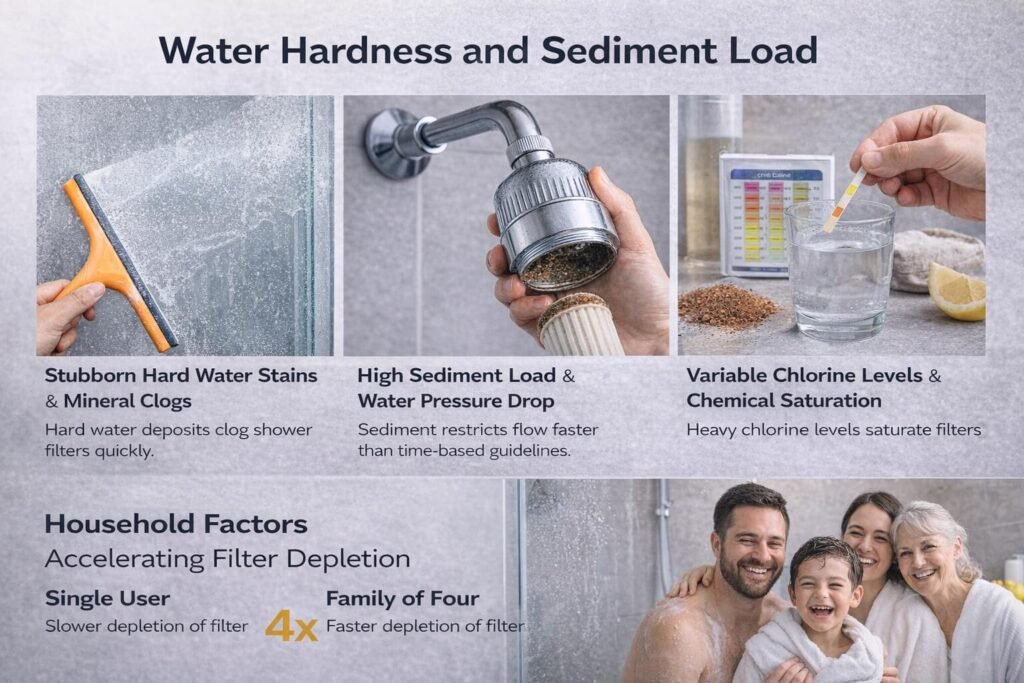
In many parts of the United States, water hardness is a significant challenge. High levels of calcium and magnesium don’t just leave hard water stains on glass; they physically clog the filtration mesh.
- Sediment Impact: If your water supply carries heavy sediment or rust, the physical pre-filter stages of our 15-stage system work harder to keep the water clear.
- Pressure Drop: High sediment load is the primary reason for a water pressure drop before the 6-month mark. The filter is doing its job by trapping debris, but it restricts flow once full.
Household Traffic: Volume vs. Time
Filters are rated by gallon capacity, not calendar days. The “6-month” estimate usually assumes average usage for a small household.
- Single User: A person living alone might get 6 to 8 months of peak performance.
- Family of Four: A busy household with multiple daily showers pushes significantly more water through the system. This accelerates the depletion of the Activated carbon adsorption layers, often requiring a shower filter replacement cartridge every 3 to 4 months.
Chlorine Levels and Chemical Saturation
Municipal water contaminants vary by city. If your local water treatment facility uses high concentrations of chlorine or chloramines, the chemical filtration stages—specifically the KDF 55 Media and Calcium Sulfite—will saturate faster.
- Chemical Depletion: These layers neutralize chemicals through a redox reaction. Higher input levels of chlorine mean the media is “spent” more quickly.
- Sensory Check: When these stages are depleted, you risk the return of the drying effects that chlorine has on your skin.
By recognizing these variables, we can move away from arbitrary dates and focus on maintaining the water quality maintenance standards that protect your skin and hair.
The Technical Benchmark: The 15-Stage Advantage
When we analyze why some filters fail in weeks while others last months, the internal architecture is usually the deciding factor. A single-stage carbon filter often faces a rapid chlorine saturation point because it tries to do everything at once. Our 15-stage filtration system extends the effective replacement cycle by distributing the workload across specialized layers. This ensures that the filter doesn’t just block contaminants but manages them efficiently to maintain a high shower head flow rate throughout its lifespan.
Layered Filtration Logic: Pre-filtration, Chemical Neutralization, and Polishing
To maximize the shower filter cartridge lifespan, we arrange the media in a specific sequence. This prevents the finer chemical filtration layers from getting clogged by physical debris like rust or sand.
| Filtration Phase | Key Components | Function | Impact on Lifespan |
|---|---|---|---|
| 1. Pre-Filtration | Stainless Steel Mesh, PP Cotton | Traps large sediments, rust, and physical particles. | Prevents early clogging of inner layers. |
| 2. Neutralization | KDF 55 Media, Calcium Sulfite | Targets chlorine, heavy metals, and bacteria in hot water. | Handles the heavy chemical load. |
| 3. Polishing | Activated Carbon, Vitamin C | Removes odors, residual chemicals, and balances pH. | Ensures final water quality feels soft. |
The Role of KDF 55 and Calcium Sulfite in Hot Water
Standard activated carbon adsorption can be less effective when water temperatures rise, as heat can sometimes cause carbon to release trapped contaminants. This is where KDF 55 Media and Calcium sulfite filtration become critical. These materials are specifically engineered to perform effectively in high-temperature environments typical of American showers. By relying on these robust materials for the heavy lifting of heavy metal reduction and chlorine removal, we protect the more delicate activated carbon layers, ensuring they remain effective for the full duration of the cycle. This multi-layered protection is a key factor in delivering consistent shower filter benefits for hair and skin over the long term.
The Saturation Point: Holding More Contaminants Before Pressure Drops
A common customer complaint with inferior filters is a sudden water pressure drop only a few weeks after installation. This usually happens because the filter media has compacted or become coated in hard water sediment. Our 15-stage design increases the total surface area available for filtration. This allows the cartridge to hold a significantly higher volume of contaminants before airflow is restricted.
We essentially create a deeper “trash can” for impurities, allowing the water to flow freely for months rather than weeks, keeping the user experience consistent from the first shower to the last day of the cycle.
Warning Signs: Educating the Customer on When to Swap
3 Sensory Signs Your Filter is “Dead”
Technical specs aside, your senses are the ultimate detector. Instead of looking at the calendar, look for these three non-negotiable signs that you have hit the chlorine saturation point.
1. The “Pool Water” Smell Returns
Jinko’s 15-stage filtration system uses Activated Carbon and Calcium Sulfite specifically to neutralize odors. If you turn on the hot water and smell that distinct bleach-like scent, the chemical media is spent. It is no longer protecting your lungs or skin from chlorine absorption.
2. The “Soap Scum” Test
Hard water minerals (calcium and magnesium) prevent soap from lathering. If you notice you are using more shampoo to get a good foam, or if hard water stains are reappearing on your glass doors, the softening layers of the filter are saturated.
3. The Pressure Drop (Most Common)
A significant water pressure drop is actually a safety feature. It means the physical mesh layers have successfully trapped a massive amount of rust, sand, and pipe debris. The filter sacrificed itself to keep that sediment off your skin.
Pro Tip: Do not remove the filter to fix the pressure! That pressure drop proves the water is dirty. The solution is a replacement cartridge, not removal.
The calendar is just a guideline; your senses are the real test. I always tell users that the shower filter cartridge lifespan isn’t set in stone because municipal water quality varies wildly across the US. You need to pay attention to the physical changes in your water to ensure you aren’t showering in contaminants after the filter capacity is depleted.
Why Multi-Stage Filters Last Longer
Why do some filters clog in 4 weeks while others last 6 months? It comes down to internal architecture. Cheap single-stage filters try to do everything with one layer of carbon, which saturates instantly in hot water.
We engineered the Jinko 15-stage system to act like a relay race:
- Phase 1: Pre-Filtration (Steel Mesh): Traps the big chunks (rust, sand) so they don’t clog the fine chemicals.
- Phase 2: KDF 55 & Calcium Sulfite: Specialized specifically for hot water environments to neutralize chlorine where carbon fails.
- Phase 3: Polishing (Vitamin C): Adds a final conditioning touch for hair and skin health.
Sensory Cues: The Return of the “Pool Water” Smell
The most immediate red flag is odor. Our 15-stage filtration system uses Activated Carbon and Calcium Sulfite specifically to neutralize odors and volatile organic compounds. When you start smelling that distinct bleach-like scent again, it means the media has reached its chlorine saturation point. The filter can no longer adsorb the chemicals effectively, leading to increased dermal absorption of chemicals during your shower.
Visual and Tactile Cues
If your soap stops lathering easily or you notice soap scum building up on the glass, the hard water minerals are slipping through. More importantly, listen to your body. If the itchiness returns or your hair feels brittle, the filter is done.
Maintaining that barrier is crucial; much likehow micro-bubbles improve your skin overall health by keeping pores clear, a fresh filter is essential for keeping harsh contaminants away from your skin barrier.
Flow Rate Drop and Sediment Buildup
A significant water pressure drop is a mechanical sign rather than a chemical one. The Jinko filter includes high-density stainless steel mesh to trap physical debris.
- Sediment Clogging: If the flow restricts, the mesh is doing its job holding back hard water sediment, rust, and pipe debris.
- Saturation: Once the physical stages are packed, water can’t pass through efficiently, indicating the cartridge is physically full.
Actionable Maintenance Checks
Don’t wait for the water to trickle. I recommend a quick check every 4 months to stay ahead of the filter replacement schedule:
- Sniff Test: Run hot water for 30 seconds. If it smells like municipal tap water, replace the cartridge immediately.
- Flow Check: If your shower head flow rate has noticeably decreased compared to the sink faucet, the mesh is likely clogged.
- Visual Inspection: Unscrew the housing (it’s a tool-free, universal shower filter fit). If the input side of the cartridge is dark brown or coated in slime, it is time for a new one.
Best Practices for Managing Replacement Cycles
Strategies for Businesses and Distributors
Consistency is the hardest part of water quality maintenance. For retailers and distributors, the most effective strategy to ensure customer satisfaction is removing the guesswork from the replacement schedule. Implementing subscription or “auto-ship” models for shower filter replacement cartridges ensures that users receive a fresh unit exactly when their 15-stage media reaches saturation. This proactive approach prevents the negative feedback that comes from using expired filters and stabilizes revenue streams by turning a one-time purchase into a recurring relationship.
Stocking Universal Fit Cartridges
Inventory management becomes significantly easier when dealing with standardized components. We rely on the universal shower filter fit utilizing standard 1/2″ NPT threads. This design compatibility means a single cartridge type works across fixed, rainfall, and handheld setups. As a shower filter manufacturer, we prioritize this universality to reduce SKU complexity for distributors while ensuring end-users never struggle to find the right part for their specific bathroom fixture.
The “Backwash” Myth vs. Replacement Reality
There is a common misconception that rinsing or “backwashing” a cartridge extends its life. We need to be clear: you cannot wash away chemical saturation.
- Sediment vs. Chemicals: Rinsing might clear some large debris from the mesh, but it does not recharge Activated carbon or KDF 55 media.
- Adsorption Limits: Once the filtration layers have adsorbed their maximum capacity of chlorine and heavy metals, the chemical bond is permanent.
- The Only Fix: The only way to restore “soft water” performance is a complete swap of the internal cartridge.
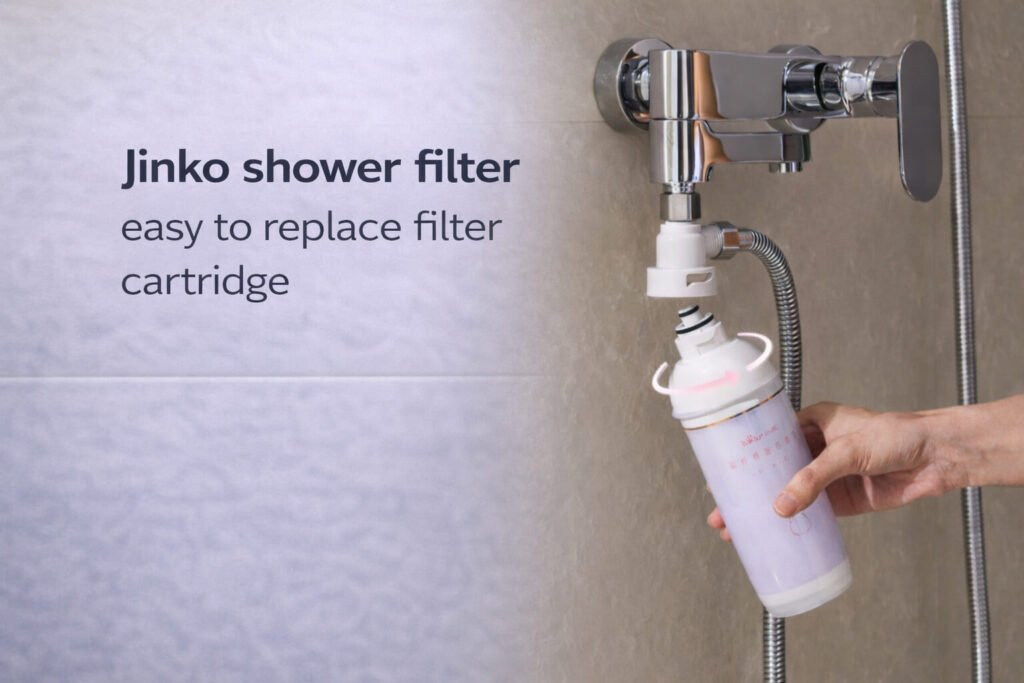
Simplicity of Jinko’s Tool-Free Swap
Complexity is the enemy of regular maintenance. If a customer needs a plumber or a wrench to change a filter, they will delay doing it. The Jinko design focuses on a tool-free installation that takes under five minutes. The housing unscrews by hand, allowing for a quick drop-in of the new refill. This accessibility ensures that maintaining high flow rate and filtration efficiency is a hassle-free task that fits easily into a busy schedule.
FAQ: Common Questions About Shower Filter Lifespans
We get these questions constantly. Understanding the mechanics of your filtration system helps you get the best performance and value out of every cartridge. Here is the straight talk on managing your shower filter replacement schedule.
How do I know exactly when to change my shower filter?
Don’t rely solely on the calendar. While we generally recommend a swap every 4 to 6 months, your senses are the best indicators. The moment you notice the return of that distinct “pool water” smell, the chlorine saturation point has likely been reached. Additionally, if your skin starts feeling dry or itchy again, the 15-stage filtration system is no longer effectively neutralizing harsh chemicals.
Does hard water shorten the life of a shower filter?
Yes, absolutely. Hard water sediment—specifically calcium and magnesium buildup—physically clogs the filtration mesh faster than soft water does. If you live in an area with heavy mineral content, the physical layers of the filter will trap debris quicker, potentially restricting flow before the chemical filtration stages (like KDF 55 Media) are actually depleted. In these cases, you might need a shower filter replacement cartridge closer to the 4-month mark.
Can I clean and reuse a shower filter cartridge?
No. While rinsing might remove some surface sediment, it does nothing to restore the chemical bonding sites in the Activated Carbon or KDF 55 media. Once the media is chemically saturated, a fresh refill is the only solution.
Why did my water pressure drop after installing a filter?
A slight reduction is normal as water pushes through 15 stages of media, but a significant water pressure drop usually indicates one of two things:
- End of Life: If the pressure drops after months of use, the filter has successfully trapped a large volume of sediment and needs replacing.
- Installation: If it happens immediately, ensure the washer is seated correctly. Our universal shower filter fit is designed to maintain high flow, so a drastic drop often means the cartridge is doing its job protecting you from heavy sediment loads.
Is it hard to change?
Not at all. We utilize a universal shower filter fit (standard 1/2″ NPT threads) that unscrews by hand. No plumbers or wrenches are required for the 2-minute swap.
Conclusion:
Stop Counting Days, Start Feeling the Water The calendar is just a guideline; your senses are the real test. Regular maintenance of your 15-stage filter is the only way to ensure your skin and hair stay protected from harsh municipal contaminants.
Ready to restore your water quality?