
Search for a bathtub water filter and you will find three different products sold under one name. One attaches to or hangs from the tub spout. One is placed in the bath water itself. The third is an inline filter fitted on the hose of a handheld shower over the tub. They do not connect the same way or use the same cartridge, and retail listings rarely tell them apart. If you are a brand or wholesaler adding this category, sort out which one you mean before you choose a supplier, or you may end up with stock that does not fit the tubs your customers own.
This guide separates the three types, matches them to common tub setups and explains what the filter media can and cannot do. Jinko makes inline shower filters with a G1/2 inch connection, so most of the product detail here concerns the third type.
The three things people mean by “bathtub water filter”
Spout and bath ball filters
The most common retail version sits at the end of the tub spout, so water runs through a cartridge on its way into the tub. Some are a housing that screws or clamps onto the spout. Others are the bath ball type: a round housing that hangs from the spout on a strap. When people search for a bathtub faucet filter, this is usually what they have in mind. The principle is close to the faucet water filters made for sink taps, but a tub spout is a different fitting. Many spouts have no thread at the outlet, and some have a diverter on top that sends water up to the shower.
Fit is the main limit. Spouts vary in length, diameter and shape, and some listings say the spout must be a few inches long for the ball to hang properly. Sellers quote cartridge life in baths rather than months, with figures that range from a few dozen to a couple of hundred baths. Those figures are the sellers’ own claims.
Floating filters
A floating filter works on a different idea. It goes into the tub once it has filled, so it sits in water that is already there instead of filtering water on its way in. Products like this are sold under names such as bath filter or bathing water filter, but we have not found independent data on how much they change a full tub. We would not make performance claims for one without your own test results.
Inline filters before a handheld shower
The third type is an inline filter fitted on the hose line of a hand shower, usually between the hose and the handset. Every drop that comes out of the hand shower passes through the cartridge first. Shower hoses commonly use a G1/2 inch thread, which is the same connection used by standard inline shower filters. Our guide on how an inline shower filter is built covers the housing and cartridge in more detail.
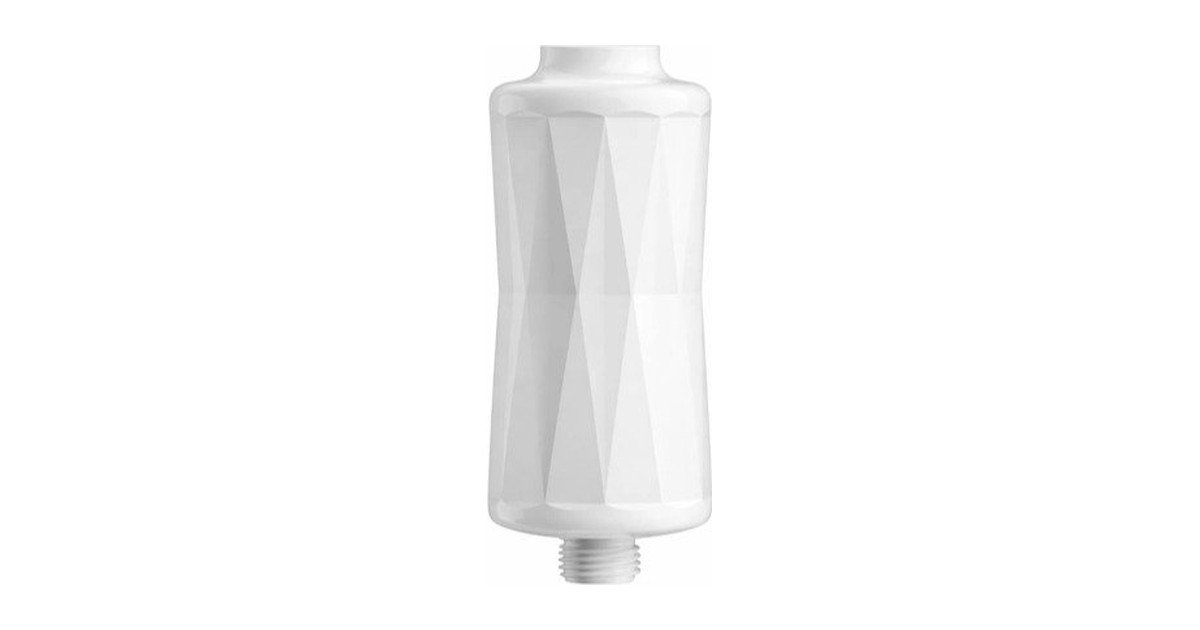
One search term, three structures. The structure decides the connection, the cartridge size and how the customer uses the product day to day. Retail pages mix them together, so your listing should not.
Which water filter for a bathtub fits which tub
Start from the bathroom, not the product. These are the four tub setups you will meet most often.
| Tub setup | Filter types that can work | What to check |
|---|---|---|
| Spout only, no shower | Spout or bath ball filter; floating filter | Spout length and shape, whether the outlet is threaded, where the diverter sits |
| Tub-shower combo with a fixed shower head | Spout filter for the tub; inline filter before the fixed shower head | The spout and the shower arm separately, since they are two different fittings |
| Tub with a handheld shower on a hose | Inline filter on the hose; spout filter for the spout | The hose and handset thread, and how heavy the handset feels with a filter added |
| Freestanding tub with a floor-mounted mixer | Usually an inline filter on the hand shower hose | Tall or curved spouts may not take a spout filter; check the hose thread and the space around the handset |
| Tub | Filter options | Check first |
|---|---|---|
| Spout only, no shower | Spout or bath ball filter; floating filter | Spout length and shape, threaded outlet, diverter position |
| Tub-shower with fixed head | Spout filter for the tub; inline filter before the head | Spout and shower arm separately |
| Tub with hand shower on a hose | Inline filter on the hose; spout filter for the spout | Hose and handset thread; weight of the handset |
| Freestanding tub, floor mixer | Usually an inline filter on the hand shower hose | Hose thread and space around the handset |
Shower hoses are often G1/2 inch, but not always, and thread conventions differ between markets. Ask for the thread standard in your target market, and get a photo of a typical connection from your customer or a local installer before you settle on a format.
What the filter media can and cannot do
Most bath and shower filters use some mix of the same media: activated carbon or carbon fiber, copper-zinc (KDF-type) media, calcium sulfite and vitamin C. On Jinko’s JK-S4, JK-S5 and JK-S6, the composite cartridge combines all four. The JK-S3 takes a different set: PP cotton with calcium sulfite, a carbon rod, or a carbon fiber cartridge. These media are mainly aimed at chlorine and chloramine. Jinko does not publish removal rates, and you should not print one on a bathtub product unless a test report covers that exact cartridge.
Not a water softener
Some retail listings say their bath filter softens water or reduces calcium and magnesium. Others, selling very similar products, say plainly that theirs does not. These media are not designed to remove hardness minerals such as calcium and magnesium, and they do not work like an ion exchange softener. If your market has hard water, read how shower filters handle hard water before you write any claim, and keep “softens water” off the box.
Why people filter bath water at all
Water utilities disinfect drinking water with chlorine, chloramine or chlorine dioxide and leave a low level in the pipes so it keeps working on the way to the tap, as the CDC explains. The EPA notes that chloramine has been used in the United States since the 1930s, that more than one in five Americans use water treated with it, and lists bathing among the ordinary household uses of chloraminated water that meets its rules. For a US buyer, then, a bath filter is a preference product, usually bought because of the chlorine smell. It is not a fix for unsafe water, and your listing should not suggest it is.
Hot water and cartridge life
Jinko’s inline filters are rated for water from 5 to 55°C (about 41 to 131°F) at 0.1 to 0.5 MPa. Bath water comes from the hot side of the mixer, so if a building runs its hot water very hot, check the supply temperature against the range of whatever filter you sell, ours included.
Bath ball sellers count cartridge life in baths. Jinko recommends changing its cartridges every 3 to 6 months, depending on how much water goes through them. These are different measures, so do not convert one into the other on your packaging. Pick one basis and use it everywhere.
Baby and pet bathing: what a filter does and does not change
Many people searching this term are parents, and some review sites recommend bath filters for baby baths. A filter does not change the basic safety rules. The American Academy of Pediatrics’ guidance on bathing a newborn says never to leave a baby alone in the bath, even for an instant, never to bathe a baby in running water or with a sprayer attached to the faucet, and to keep the hottest water at the faucet at no more than 120°F (49°C). A filter on the hand shower is no reason to rinse a baby under running water.
If you sell to families, print those rules in the manual. Do not describe the product as made for babies or for sensitive skin. Jinko has no test data behind claims like that, and a bathtub filter does not need them to sell.
For pets, we make no claims either way. The one practical point is format: if dogs are washed in the tub with a hand shower, an inline filter on that hose fits the routine better than a spout filter. Check the thread first.
Can a Jinko filter be used on a bathtub?
Jinko’s filters are inline models with a G1/2 inch connection, made to fit before a shower head or before an overhead rain shower, with no adapter needed on a standard G1/2 inch fitting. If the tub has a handheld shower on a standard G1/2 inch hose, a filter like this can sit between the hose and the shower head. Check the thread first. We have not tested every tub mixer and hose. Jinko does not make a dedicated bathtub filter: there is no spout model and no floating model in our range, and our filters are not designed to attach to a tub spout.
The model depends on who will use it. The JK-S3 is a clip-in design, so the cartridge comes out quickly, which helps when cartridges are changed across many rooms. The JK-S4, JK-S5 and JK-S6 share one composite cartridge, so a single refill covers all three, and the JK-S6 has an aluminum housing for a premium range. The box contains the filter body and cartridge but no shower head, so your customer keeps the hand shower they already have. Our side-by-side comparison of shower filter types shows how the formats differ.
If your customer would rather swap the hand shower for a tub with a handset that holds its own cartridge, that is a separate product. See Jinko’s handheld shower filter products.
What brands and wholesalers should decide before adding a bathtub filter
- The format. Spout, inline on the hose, or floating. Each needs its own listing copy, and they should not share one product page.
- The connection. Tub mixers and hoses vary by market. Ask for the thread standard in your target market and confirm it against a real sample before you place the order.
- The cartridge and the wording. Choose the media, then write a manual that states the temperature range, the change interval, that the filter is not a water softener, and the AAP bathing rules if you sell to families. A scented vitamin C cartridge is one option; our guide to a custom scented shower filter covers how scents and colors are planned.
- The branding. Logo, packaging and manual are standard. On the JK-S4, JK-S5 and JK-S6, housing color and surface finish can also be changed, and a custom cartridge is evaluated per order. Logos can be laser engraved, screen printed or hot stamped.
- The documents. Jinko can provide CE and RoHS documentation. Check with your importer which other requirements apply in your market.
- The timeline and quantity. Existing samples take 2 to 3 days, customized samples 5 to 7 days, and mass production about 20 days after approval. The MOQ is from 1,000 units, flexible by model and customization.
For the wider picture of models, cartridges and customization, see how Jinko manufactures private label shower filters.
Which type for which buyer
Brands. If your range already includes shower filters, an inline filter for the hand shower hose is the easiest step into the bathtub category: the same connection, plus cartridges and refills you already stock. If you want a spout or bath ball product, you will need a supplier that makes that format. Jinko does not, so plan that part of the range separately.
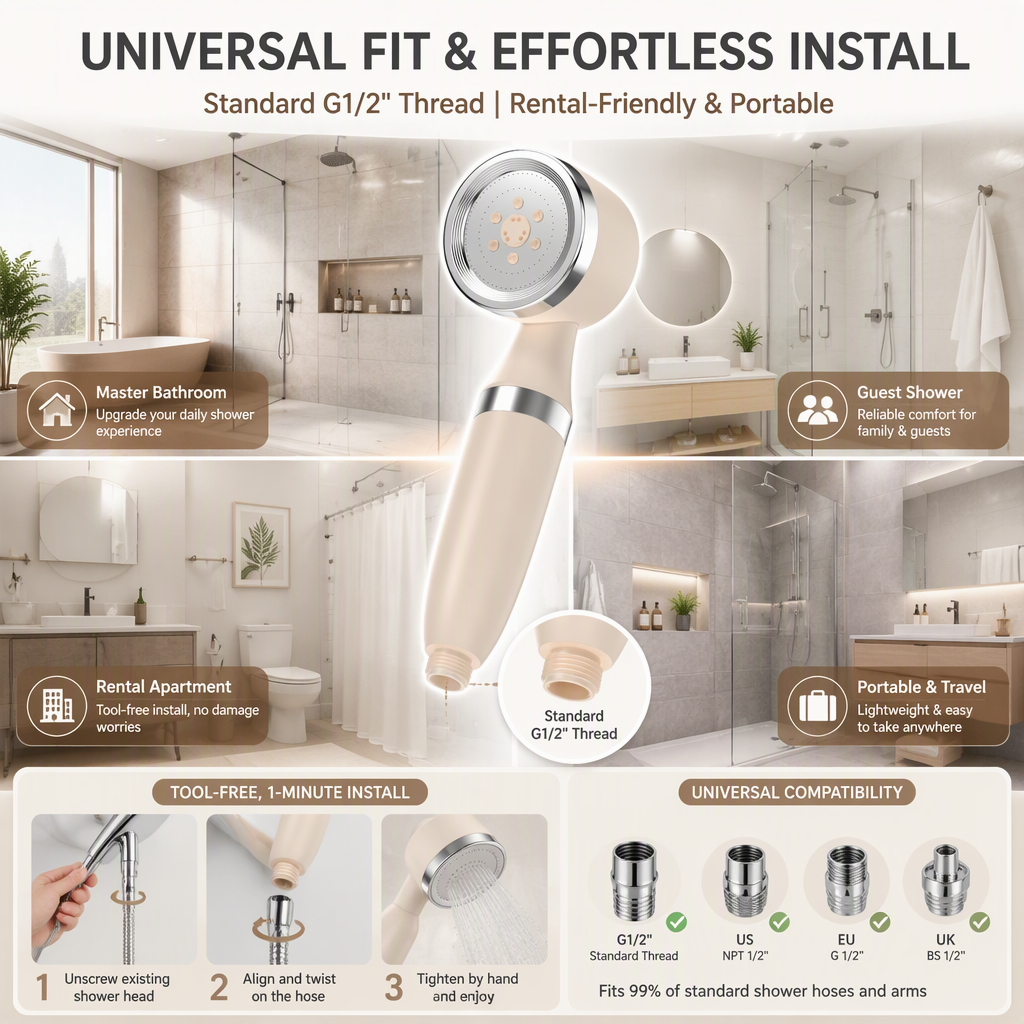
Wholesalers. Buy according to the tubs and hoses common in the market you sell into. Order samples and fit them on real tubs before you commit to volume, because a filter that does not fit becomes a return.
Hotels. Tub-shower combos with a handheld shower are where an inline filter makes the most sense. A spout filter has to be checked room by room, since spout shapes often vary within one property.
Whichever bathtub water filter you choose, the connection decides whether it works. If the tubs you sell into have a handheld shower, send us a photo of the hose connection, your expected quantity and whether you need your own branding through our contact page, and we will look at whether one of our inline filters suits that set-up.