
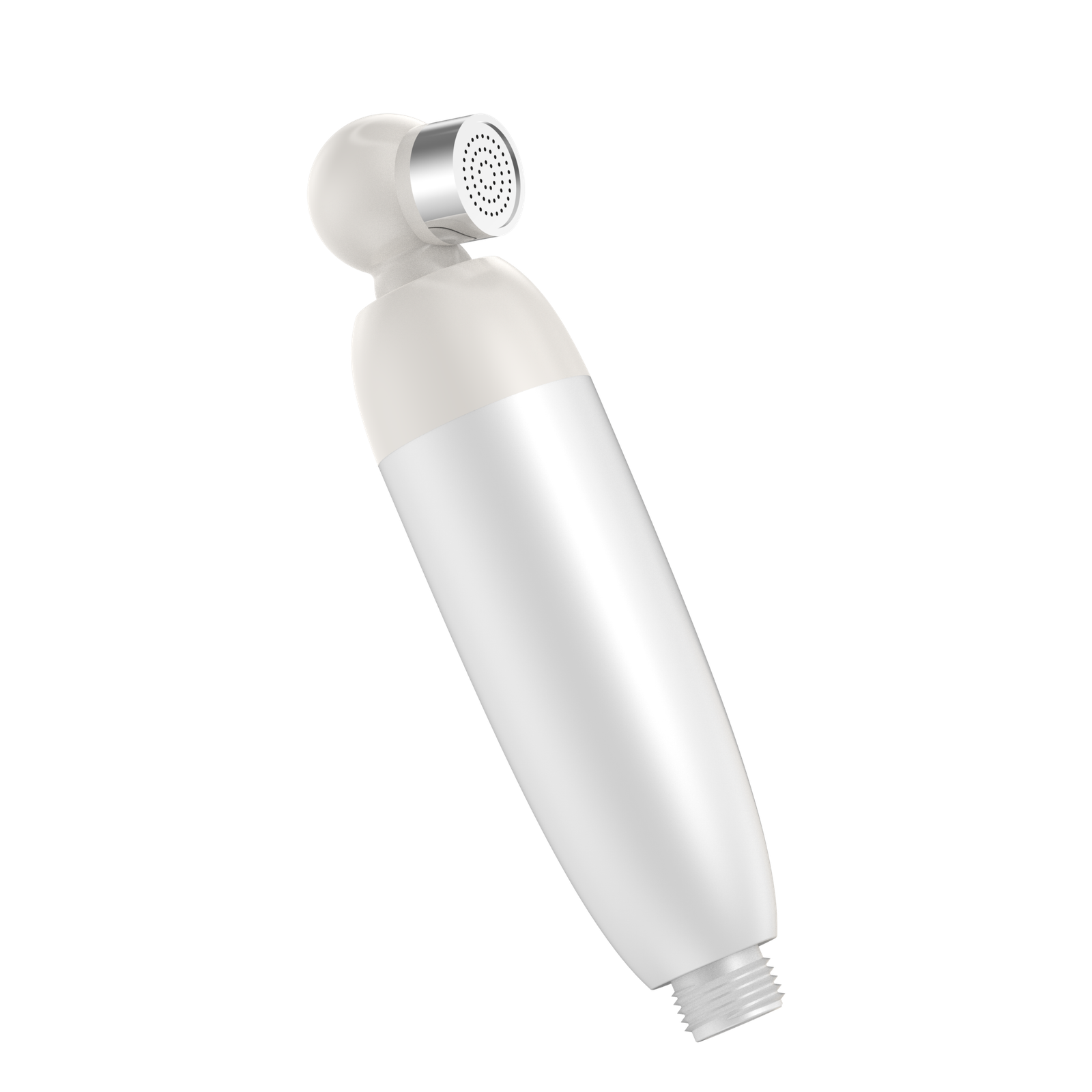
A microbubble shower head mixes very small air bubbles, mostly under 100 microns across, into the shower stream. Most designs need no pump or power. They use the water pressure itself: a narrow passage speeds the water up, the pressure drops, and air is pulled in or released from the water as fine bubbles. The bubbles make the spray look cloudy and change how it feels on the skin. Research on skin benefits is still limited, so brands should be careful with claims.
This guide explains how microbubble technology works, what the evidence says, how a microbubble shower head differs from “microbubble therapy” bathtubs, and what to check if you plan to sell one under your own brand.
What are microbubbles? Size and key features
“Fine bubbles” is the umbrella term. A 2025 clinical study in the Journal of Dermatology describes fine bubble technology as producing microbubbles smaller than 100 µm and ultrafine bubbles smaller than 1 µm.
The features that make microbubbles useful in water, as summarized in the 2024 Scientific Reports study cited below:
- Large surface area for their volume. Many small bubbles have far more gas-water surface than a few large ones.
- Long residence time: they stay in the water longer than ordinary bubbles.
- Agitation and a strong impulse when they burst, which is the main reason they are studied for cleaning.
The same physics is used well outside the bathroom. In medicine, gas-filled microbubbles are used as ultrasound contrast agents and for targeted drug delivery. Those are engineered medical products and have nothing to do with a shower head, but they explain why much of what you read about “microbubble features” comes from medical research.
How a microbubble shower head makes bubbles
Most microbubble shower heads use a Venturi-type design:
- Water passes through a narrow section inside the handle or head and speeds up.
- The pressure in that section drops. Air dissolved in the water comes out as fine bubbles, and in many designs extra air is drawn in through small holes.
- A mesh, vortex passage or perforated plate breaks the air into smaller bubbles before the water leaves the spray face.
This is described in patents such as US9370784B2, where a restriction in the shower handle uses Bernoulli’s principle to release dissolved air as fine bubbles. A 2024 study in Scientific Reports used the same approach: a Venturi nozzle with a mesh and air holes that generated fine bubbles without extra energy input.
Because the bubbles come from the water’s own pressure, low water pressure means fewer and larger bubbles. That makes the operating pressure range one of the first things to check.
What the evidence shows so far
| Study | What was tested | Result |
|---|---|---|
| Kang et al., Scientific Reports, 2024 | A hand-held bubbly jet against a plain water jet, removing foundation and lip tint from synthetic leather and artificial skin | The bubbly jet cleaned much better, even without detergent. The authors link this to higher jet energy and bubbles hitting the cosmetic directly. |
| Kato et al., Journal of Dermatology, 2025 | A fine bubble shower against a conventional shower in 23 adults with mild atopic dermatitis, double-blind crossover | The fine bubble shower was well tolerated and did not worsen skin condition over 4 weeks. It was not shown to be better than a conventional shower. The study was funded by the shower head maker. |
So the cleaning mechanism has lab support, and early clinical data suggest the shower is gentle. There is not yet good evidence for claims such as deeper pore cleansing in real use, more oxygen in the skin, anti-aging effects or relief from skin conditions.
Microbubble therapy vs a microbubble shower head
“Microbubble therapy” usually refers to bathtub systems, often in walk-in tubs, that fill pressurized bathwater with microbubbles while you soak. A shower head works differently: the water touches the skin for seconds, not minutes, and the bubbles are produced only while the water runs. The two share the term but are different products, so results reported for therapy baths should not be applied to a shower head.
For a consumer view of how microbubbles are said to affect the skin, see how micro bubbles affect your skin.
Microbubble shower head features to compare
| Feature | Why it matters | What to ask the factory |
|---|---|---|
| Bubble generator design | Decides how many bubbles form and at what pressure | Venturi, air-intake or vortex design, and where it sits in the handle |
| Working pressure range | Weak pressure gives fewer, larger bubbles | The pressure range the bubble effect was checked at |
| Spray plate | Nozzle size affects feel and clogging in hard water | Nozzle material and whether the plate can be removed for cleaning |
| Filter cartridge | Many hand-held microbubble heads also hold a chlorine-reduction cartridge | Cartridge media, replacement interval and whether refills are sold separately |
| Connection | Must fit the hose in your target market | Thread standard, for example G1/2″ |
| Claims evidence | Water-saving, pressure and skin claims need data | Test reports for the finished model behind every number on the box |
If a filtered hand-held head is part of your plan, the same cartridge questions apply as for any shower filter. See KDF vs vitamin C shower filter media and the hand-held shower filter range.
Claims to avoid on packaging and listings
- Percentages for “deeper cleansing,” water saving or pressure boost without a test on your exact model.
- Oxygen, negative ion or sterilization claims.
- Medical claims about eczema, psoriasis, acne or hair loss. The one controlled trial above did not show the shower was better than a normal one.
- Certification logos that your supplier cannot document for the finished product.
Microbubble faucet filters
The same idea is used at the tap. Jinko’s H1 series skincare micro bubble faucet filter brings microbubbles to a tap-mounted filter.

Microbubble shower head FAQ
Do microbubble shower heads really work?
They do produce fine bubbles, and lab tests show bubbly jets remove cosmetics from artificial skin better than plain water. Evidence for long-term skin benefits in real showers is still limited.
Why does the water look milky?
Millions of fine bubbles scatter light, so the stream looks white. It clears as the bubbles rise and burst.
Is a micro bubble shower head the same as a filtered shower head?
No. The bubble generator changes the spray. A filter cartridge reduces chlorine. Some hand-held models combine both.
Does a microbubble shower head need electricity?
Most microbubble shower heads do not. They use the water pressure to form the bubbles.
OEM microbubble shower heads from Jinko
Jinko is a shower filter and water filtration factory in Foshan, China. We offer OEM and ODM microbubble shower heads for private label brands, including hand-held models that can hold a filter cartridge, alongside our H1 series micro bubble faucet filter. Logo, packaging, color and cartridge options are confirmed for each project. Share the format you want, your target market and quantity, and we will tell you which models fit and what documents are available. Contact us or see the full product range.