
Filtered water improves skin health by reducing common tap water irritants such as chlorine, hard water minerals, and trace heavy metals before they touch your face or body. These contaminants can weaken the skin barrier, increase dryness, and make sensitive skin feel tight or irritated after washing.
You spend hundreds of dollars on premium serums, retinoids, and moisturizers, yet you’re likely overlooking the very first thing that touches your face every single day: your tap water.
The truth is, unfiltered tap water carries a hidden chemical and mineral payload that quietly compromises your skin barrier function every time you wash or shower. While you’re treating your skin with top-tier products, invisible tap water contaminants are actively undoing your hard work, leaving your face feeling tight, dry, and irritated.
Transitioning to clean, filtered water is the ultimate missing step that protects your skin microbiome balance, stops transepidermal water loss (TEWL), and allows your skincare products to actually do their job.
Let’s dive right into how switching to Jinko water filtration can completely transform your skin from the outside in.
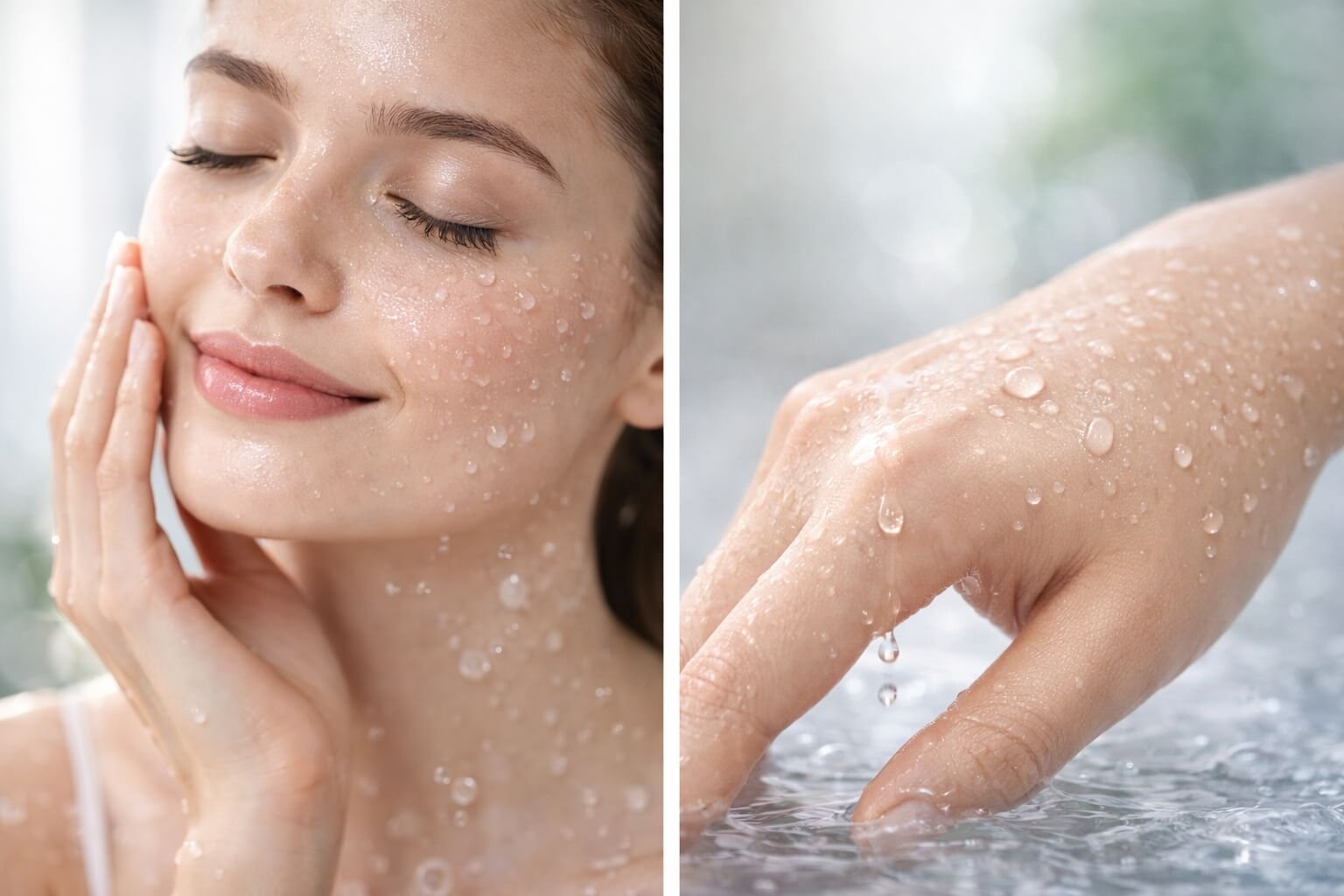
What’s Lurking in Your Tap Water?
Ever wonder why your skin feels tight, dry, or irritated right after stepping out of the shower? The culprit isn’t your skincare routine—it’s your plumbing. Standard tap water is often packed with invisible skin irritants that quietly disrupt your skin barrier function every single time you wash your face or bathe.
Understanding how clean and filtered water improve skin health starts with unmasking the specific tap water contaminants draining your skin’s natural radiance.
Hard Water Minerals
If you live in an area with hard water, your tap is rich in dissolved calcium and magnesium. While these minerals are fine to drink, they are a nightmare for your skin.
- The Soap Scum Effect: Calcium and magnesium chemically react with your cleansers, creating a film that doesn’t rinse away. This leaves behind a pore-clogging residue.
- Stripped Moisture: This mineral buildup acts like a blanket, trapping bacteria and stripping away natural skin oils (sebum).
- Spike in TEWL: By disturbing the surface integrity, hard water minerals increase transepidermal water loss (TEWL), leaving your skin chronically dehydrated.
Chlorine and Chloramines
Municipal water treatment facilities use chlorine and chloramines to kill bacteria. It keeps the water safe from pathogens, but it acts like bleach on your delicate skin.
- Drying Agent: Chlorine strips away the protective lipid layer of your skin on contact.
- Precursor to Redness: Regular exposure triggers sensitive skin irritation, causing blotchiness and flaking.
- Eczema Flare-ups: For those prone to atopic dermatitis / eczema, chlorinated water acts as a massive environmental trigger that worsens inflammation.
Heavy Metals and Emerging Contaminants
Old city pipes and industrial runoff introduce a cocktail of trace heavy metals—like lead, copper, and iron—along with newer emerging contaminants directly into your bathroom.
| Contaminant | Impact on Skin | Long-Term Result |
|---|---|---|
| Iron & Copper | Act as free radicals on the skin surface | Accelerated aging and collagen breakdown |
| Lead & Microplastics | Clog pores and disturb the skin microbiome balance | Frequent breakouts and dull texture |
| Chemical Runoff | Triggers low-grade, chronic inflammation | Weakened defense against environmental stressors |
When these contaminants sit on your face, they oxidize, creating free radicals that mimic the aging effects of UV rays. Filtering these hidden agitators out is the crucial first step to achieving a clear, calm complexion.
How Clean and Filtered Water Improve Skin Health
Switching to filtered water completely changes how your skin behaves. When you remove harsh chemicals and heavy minerals from your daily routine, you stop stressing your skin and let it heal. Clean water works at a foundational level to restore what tap water constantly strips away.
Preservation and Repair of the Skin Barrier
Your skin barrier function relies on natural skin oils (sebum) to lock in moisture and keep irritants out. Washing with unfiltered tap water strips these protective oils, leading to high transepidermal water loss (TEWL) and severe dryness. Clean, filtered water respects this delicate boundary. By eliminating stripping agents, it helps repair a damaged barrier, allowing your skin to retain its natural moisture and stay resilient against daily environmental stressors.
Clearer Pores and Reduced Acne Flare-Ups
Tap water packed with calcium and magnesium buildup creates a nasty chemical reaction with your soaps and cleansers. Instead of rinsing clean, it forms a sticky, pore-clogging residue on your face. This trapped film blocks oil glands and triggers breakouts. Filtered water dissolves skincare products effortlessly, ensuring everything rinses away completely so your pores stay clear and acne flare-ups diminish.
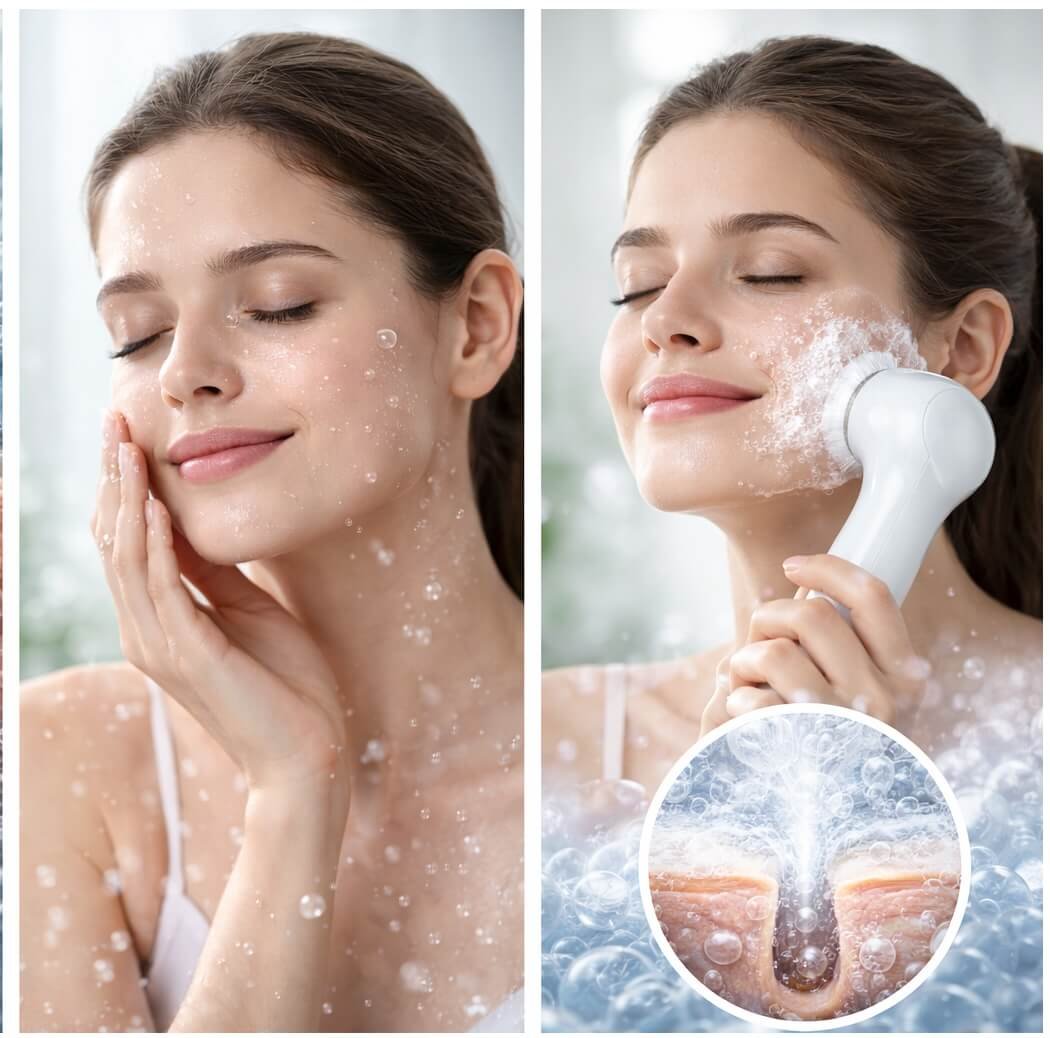
Soothing Inflammation and Chronic Skin Conditions
For anyone dealing with sensitive skin irritation, atopic dermatitis, or eczema, unfiltered tap water is a constant trigger. Residual chemicals act as fuel for inflammation. Removing these harsh elements directly calms reactive skin. You can learn more about how chlorine affects your skin to understand exactly how filtered water stops the cycle of redness, burning, and chronic flare-ups.
Balancing the Skin Microbiome
Your skin is home to a complex ecosystem of beneficial bacteria that fight off infections and control inflammation. Unfiltered tap water acts like a mild disinfectant, wiping out this good bacteria and disrupting the natural skin microbiome balance. Filtered water protects this living shield, allowing your skin’s natural defenses to stabilize and function exactly the way nature intended.
Inside Out vs. Outside In: Dual Action Hydration
True skin hydration isn’t a single step—it is a dual-action process. To achieve a glowing, healthy complexion, you have to protect your skin from the outside while hydrating it from the within. Standard tap water often undermines both sides of this equation, delivering harsh chemicals to your face and unappealing tastes to your glass.
Washing with Filtered Water (The Topical Shield)
Washing your face with unfiltered tap water strips away natural skin oils (sebum) and disrupts your skin barrier function. Chlorine and harsh minerals dry out the surface, leading to transepidermal water loss (TEWL) and leaving your skin vulnerable to irritants.
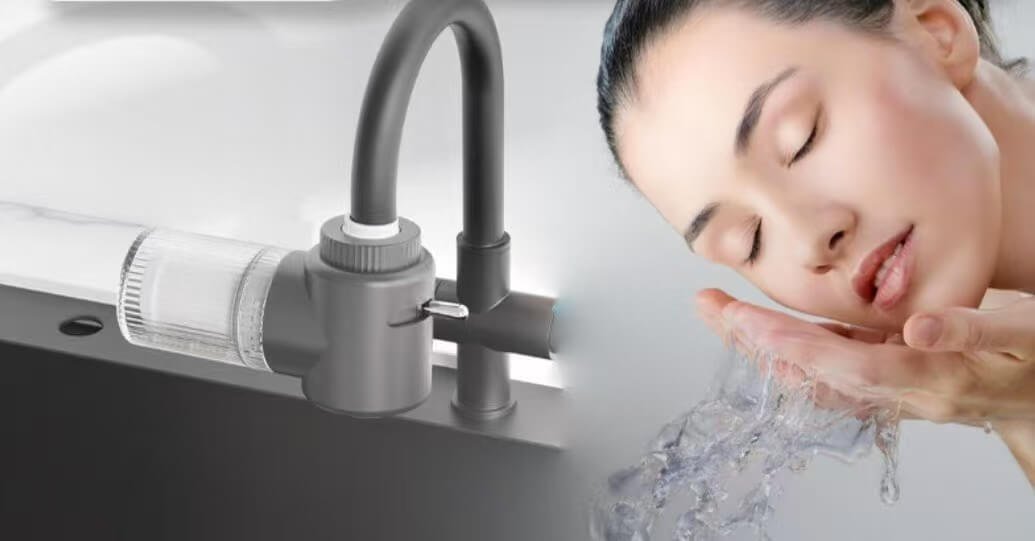
Using clean, filtered water acts as a topical shield. It cleanses without stripping, allowing your skin to retain its natural moisture and improving skincare product absorption. When your skin isn’t fighting off tap water contaminants, your serums and moisturizers can actually do their jobs. For an easy way to upgrade your bathroom sink routine, installing a dedicated faucet water filter ensures every rinse protects your skin barrier.
Drinking Filtered Water (The Cellular Foundation)
What you put into your body is just as critical as what you put on it. Cellular hydration is the foundation of plump, resilient skin. When you are properly hydrated from the inside out, your body flushes out toxins more efficiently, which directly translates to a clearer, more vibrant complexion.
However, if your tap water tastes like pool chemicals or metallic residue, you are less likely to drink enough throughout the day. Filtering your drinking water removes those unpleasant tastes and odors, making it effortless to hit your daily hydration goals and support your skin from the cellular level.
Real Results: What to Expect When You Switch
Making the switch to clean and filtered water does not just protect your health—it completely transforms your skin. When you eliminate harsh chemicals and heavy metals from your daily routine, you stop stripping your skin of its natural defense mechanisms. Within days, most people notice a significant reduction in sensitive skin irritation and a visible return of their natural radiance.
The 2-Week Timeline
Your skin operates on a renewal cycle, and removing tap water contaminants triggers an immediate positive shift. Here is exactly what you can expect when you begin washing and bathing in pure water:
- Days 1–3: Immediate Relief The familiar, tight post-shower pulling sensation disappears. Your skin retains its natural skin oils (sebum), leaving your face feeling soft and comfortable rather than stripped and dry.
- Days 4–7: Reduced Redness and Flaking Without constant exposure to chlorine and hard water minerals, inflammation begins to cool down. It is common to see a noticeable reduction in flare-ups related to atopic dermatitis / eczema and general redness.
- Days 8–11: Better Skincare Product Absorption Without a stubborn layer of calcium and magnesium buildup blocking your pores, your expensive serums and moisturizers can finally penetrate deep into the skin, maximizing their active ingredients.
- Days 12–14: Clearer, Balanced Skin By the end of two weeks, your skin microbiome balance restores itself. You will experience fewer breakouts from pore-clogging residue and a healthier, more resilient skin barrier function.
To truly maximize these results and protect your skin and hair from day one, installing a dedicated showerhead filter is the easiest and most effective first step you can take.
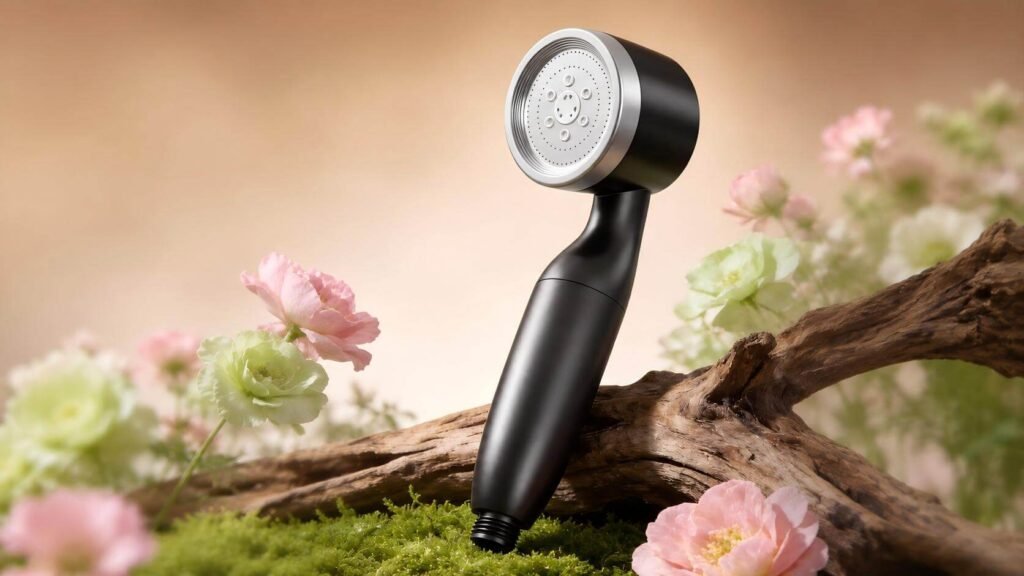
Elevating Your Routine: The Jinko Filtration Solutions
Investing in high-end skincare means very little if you are washing your face with contaminated tap water. To truly unlock how clean and filtered water improve skin health, you need a filtration system engineered to target the specific contaminants that trigger sensitive skin irritation and compromise your skin barrier function.
Why Standard Carbon Pitchers Aren’t Enough for Beauty
Most standard carbon pitchers are only designed to improve the taste of drinking water by reducing basic chlorine. They lack the specialized media required to trap heavy metals, harsh hard water minerals, and complex chemical compounds. Furthermore, a pitcher sitting on your kitchen counter does nothing to protect your skin during your morning shower or nightly sink routine, where heat opens your pores to volatile contaminants.
The Jinko Point-of-Use Experience
For targeted beauty protection, point-of-use systems deliver pristine water exactly where your skin needs it most. Our advanced engineering focuses on heavy metal reduction and total chlorine removal, ensuring your natural skin oils (sebum) remain intact to prevent transepidermal water loss (TEWL).
- Shower Filtration: Standard tap water strips your body of moisture. Upgrading with a specialized Jinko shower filter neutralizes harsh chemicals instantly, dramatically reducing flare-ups of atopic dermatitis and eczema.
- Sink Filtration: By removing calcium and magnesium buildup at the tap, you prevent pore-clogging residue from mixing with your cleansers, leading to better skincare product absorption and a balanced skin microbiome.

The Ultimate Upgrade: Jinko Whole-Home Systems
The absolute peak of skin-first water purification is a whole-home setup. By installing a comprehensive filtration system at the main water line, you guarantee that every single faucet, shower, and appliance in your home delivers pure, skin-safe water.
| Filtration Type | Target Contaminants | Primary Skin Benefit |
|---|---|---|
| Point-of-Use Filters | Chlorine, sediment, localized heavy metals | Immediate relief for facial skin and hair |
| Whole-Home Systems | Hard minerals, chloramines, industrial runoff | Comprehensive protection against full-body dryness and irritation |
A whole-home system completely eliminates the threat of hard water minerals and tap water contaminants before they ever touch your body, providing a seamless, automated foundation for lifelong cellular hydration and radiant skin health.
Frequently Asked Questions (FAQs)
Can filtered water clear acne?
Yes, switching to clean and filtered water can significantly reduce acne flare-ups. Tap water often contains chlorine and hard water minerals like calcium and magnesium. These elements strip away your skin’s natural oils, causing your body to overproduce sebum to compensate.
Furthermore, hard water creates a pore-clogging residue when it mixes with your soap or cleanser. By utilizing filtered water, you eliminate these irritants, allowing your skin barrier function to heal, pores to stay clear, and your overall skin health to improve.
How do I know if my tap water is hurting my skin?
If you experience persistent dryness, unexplained breakouts, or sensitive skin irritation immediately after showering, your tap water is likely the culprit. Common signs of tap water contaminants affecting your skin include:
- A “squeaky clean” or tight feeling after washing (which actually means your skin barrier is stripped).
- Flaky, itchy skin on your face and body.
- Dull hair and a dry scalp.
- Visible white mineral buildup on your bathroom fixtures.
To protect your skin directly at the source, installing a faucet filter is an easy, effective way to remove chlorine and heavy metals from your daily face-washing routine.
Is a showerhead filter enough for eczema?
For mild eczema or atopic dermatitis, a high-quality hand-held shower filter provides massive relief by ensuring chlorine removal and reducing daily irritation. It prevents transepidermal water loss (TEWL) and keeps the skin microbiome balance intact.
However, if you have severe eczema or live in an area with extremely hard water, a shower filter alone might not completely solve the problem. Hard water minerals can still impact your skin through laundered clothes and hands washed at other sinks. In those cases, upgrading to a whole-home water filtration system offers the ultimate comprehensive shield for sensitive skin.