
The best faucet water filter is the one certified to reduce the contaminants actually in your water, that fits your faucet, and whose cartridge you will replace on time. For chlorine taste and odor, look for NSF/ANSI 42. For lead, look for NSF/ANSI 53 with a lead reduction claim, ideally with NSF/ANSI 42 particulate reduction (Class I) as well. For PFAS, look for NSF/ANSI 53 or 58 with a claim for PFOA and PFOS. If a faucet-mounted filter cannot carry the certification you need, an under-sink or reverse osmosis system may be the better choice.
This guide compares the main filter types by what they are designed to reduce, the certification to look for, flow and replacement, so you can choose a type before you compare brands. Lists of the best faucet water filters change as models change, but the way to check them does not.
Start with your water report, not the filter
If you are on a public water system, your utility publishes an annual Consumer Confidence Report (CCR) with test results for your water. The EPA WaterSense guide to selecting water treatment systems recommends using the CCR, or a state-certified lab test for well water, to set your treatment goal first. The CDC adds that harmful contaminants often do not change how water tastes, smells or looks, so taste alone is a poor guide.
Typical goals:
- Better taste and less chlorine smell
- Lead from old service lines or plumbing
- PFAS reported by your utility
- Cysts such as Giardia and Cryptosporidium
- Dissolved minerals, nitrate or fluoride
Faucet water filter comparison table
| Filter type | Main filter media | What it is designed to reduce | Certification to look for | Flow | Replacement | Best for |
|---|---|---|---|---|---|---|
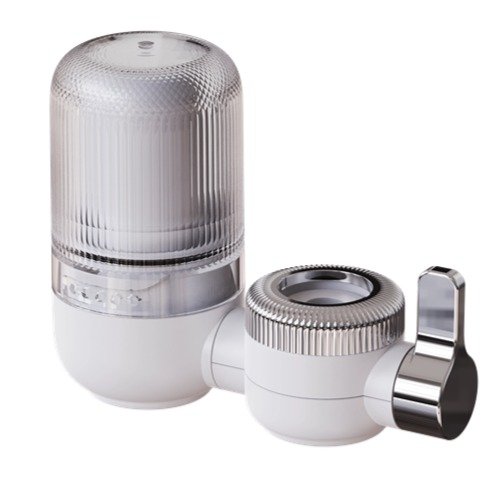
| Faucet-mounted filter, carbon | Activated carbon block or carbon fiber | Chlorine taste and odor; some models also certified for lead and other listed contaminants | NSF/ANSI 42; NSF/ANSI 53 for health claims such as lead; NSF/ANSI 401 for listed emerging compounds | Slower than the unfiltered tap; switch between filtered and unfiltered water | Cartridge, by the gallon or month rating on the package | Renters and anyone who wants filtered drinking and cooking water without plumbing work |
| Faucet-mounted filter with membrane | Carbon plus ultrafiltration or similar membrane | As above, plus particles and, depending on pore size, cysts or bacteria | As above; NSF/ANSI 53 for cyst reduction | Usually slower again; check the rated flow | Cartridge; membrane life per the maker | Households worried about particles or cysts that still want a tap-mounted unit |
| Faucet-integrated filter | Cartridge built into the faucet body | Depends on the cartridge | Same standards as above, for the specific cartridge | Dedicated filtered outlet in the faucet | Cartridge | Kitchen remodels where you want no add-on unit on the spout |
| Under-sink filter | Carbon or multi-stage cartridges | Depends on the cartridges; can treat larger quantities than tap-mounted units | NSF/ANSI 42, 53, 401 for the claims listed | Separate filtered faucet | One or more cartridges | Families who use a lot of filtered water and can install under the sink |
| Under-sink reverse osmosis (RO) | RO membrane plus pre- and post-filters | Dissolved inorganics and organics, sodium; some systems reduce nitrate, arsenic or fluoride | NSF/ANSI 58, plus 42 or 53 for the other stages | Separate faucet; also sends reject water to the drain | Pre- and post-filters plus the membrane over time | Water with dissolved contaminants a carbon filter does not address |
| Pitcher filter (for comparison) | Usually activated carbon | Mainly taste and smell; some reduce lead | NSF/ANSI 42; NSF/ANSI 53 for lead | Filled by hand; filters in batches | Cartridge | Small volumes with no installation |
Sources: EPA WaterSense guide (system types, treatment technologies and standards), CDC (pitcher filters, membranes and RO), EPA lead filter tool. Flow and cartridge life vary by model, so compare the rated flow and capacity on each product’s performance data sheet.
The best faucet water filter for your situation
- You only dislike the chlorine taste. A faucet-mounted carbon filter certified to NSF/ANSI 42 is usually enough. EPA also notes that chlorine smell fades if you leave water in an open pitcher in the fridge for a day or two.
- Your home may have lead pipes or lead solder. Choose a point-of-use filter certified to NSF/ANSI 53 for lead, ideally also to NSF/ANSI 42 for Class I particulate reduction. Faucet-mounted filters can carry this certification. Check that the lead claim is on the package or performance data sheet.
- Your utility reports PFAS. Look for NSF/ANSI 53 or 58 with a PFOA and PFOS claim. EPA’s PFAS filter fact sheet lists activated carbon, reverse osmosis and ion exchange as filter types that can be effective.
- You need to reduce nitrate, sodium or other dissolved minerals. EPA notes that carbon filtration does not remove nitrates, bacteria or dissolved minerals. Look at reverse osmosis instead.
- You use a lot of filtered water every day. An under-sink system treats larger quantities and keeps the spout free.
How to check a certification claim
Certification applies to a specific model and to the contaminants listed for it, not to everything a filter might remove. Before you buy:
- Find the certification mark and the standard number (for example, NSF/ANSI 53) on the package or the filter.
- Read the performance data sheet, which lists each contaminant the filter is certified to reduce, its rated capacity and its rated flow.
- Search the model in the certifier’s online listing directory. EPA’s lead tool lists the directories for NSF, IAPMO, WQA, UL Solutions and CSA.
- Make sure the replacement cartridge is the same certified model.
“Tested to NSF standards” is not the same as certified. A filter with NSF/ANSI 42 alone is not certified for lead.
Fit, installation and replacement
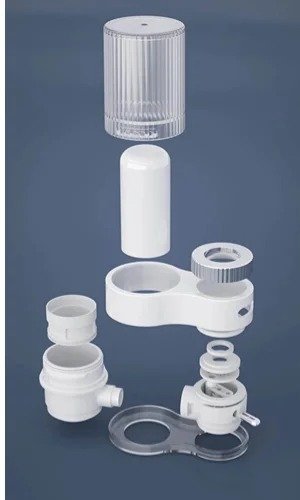
- Faucet type. Faucet-mounted filters attach to standard faucets with an adapter. Pull-out and spray faucets often do not take them, so check the maker’s compatibility list first.
- Water temperature. Check the temperature limit in the instructions. Many faucet filters are rated for cold water only.
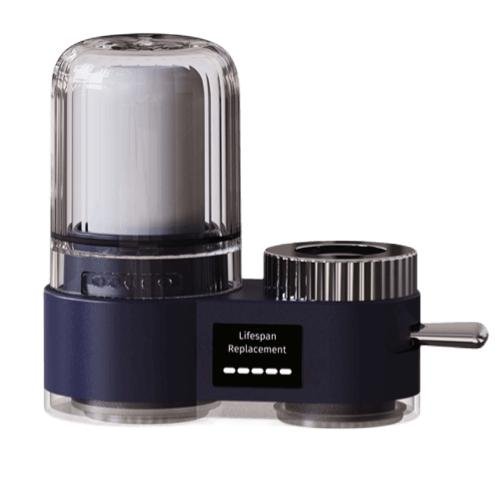
- Replacement. Replace cartridges on the maker’s schedule, by gallons or months, whichever comes first. EPA warns that unmaintained systems may make water quality worse, and that not replacing a PFAS filter on time can increase exposure.
- Running cost. Compare the cartridge price and rated gallons, not just the price of the starter kit.
Faucet water filter FAQ
Do faucet water filters remove lead?
Some do. Choose one certified to NSF/ANSI 53 for lead reduction. EPA’s consumer tool covers faucet-mounted filters with this certification.
Do faucet water filters remove PFAS?
Only models certified for PFOA and PFOS reduction under NSF/ANSI 53 or 58. EPA notes that, as of April 2024, filter certifications do not yet show reduction down to its new drinking water limits.
Do faucet filters remove fluoride?
Standard carbon faucet filters are not designed for dissolved minerals. CDC lists reverse osmosis as a method that may reduce fluoride.
Is a faucet filter better than a pitcher filter?
Both are point-of-use filters. A faucet filter gives filtered water on demand at the tap, while a pitcher filters water in batches you pour in. Compare the certifications of the two models you are considering, not the format.
How often should I replace a faucet filter cartridge?
Follow the gallon or month rating for your cartridge, whichever comes first, and replace it sooner if flow drops sharply.
For brands and importers sourcing faucet water filters
If you sell faucet water filters under your own brand, the certification and performance claims on your packaging must match the exact housing and cartridge you buy. Ask your factory for the certificate, the listed model numbers and the performance data sheet before you print. Jinko manufactures faucet water filters for OEM and private label projects, including a 2-in-1 foam and filter faucet attachment. See the full product range or send us your target market and quantity.